Sediments
Sand and gravel quarries, streams and brooks of all sizes but especially small ones make great abstract images, especially where there is color.

Anastomosing Streams in Mini-Delta: The crisscrossed sediments were deposited by anastomosing streams originating out of a ground hole along the side of Route 5 in Norwich, VT. As they exited the hole, they spread into a miniature delta that subsequently ran down a trench.

Volcanic Outwash: Sediments covered with yellow sulfur-rich crystals and grey gypsum (hydrated calcium sulfate) dust, White Island, New Zealand.

Leaking Sediments: A small delta at the base of cliffs, Kodachrome Basin, southern Utah.

Leaking Sediments Detail: A small delta at the base of cliffs, Kodachrome Basin, southern Utah.

Rocks on Pedestals: This is erosion in a sand quarry on Cape Cod, Massachusetts. Wind and rain wash out sand down to the point where a large rock caps and protects the remaining sand.

Volcanic Mud Flows on White Island, NZ: The mud flows beg the question, “Where did the mud originate?” because their sources look small yet their termini are formidable, suggesting many previous lithified flows. Maybe the material above the sources was not lithified and subject to erosion.
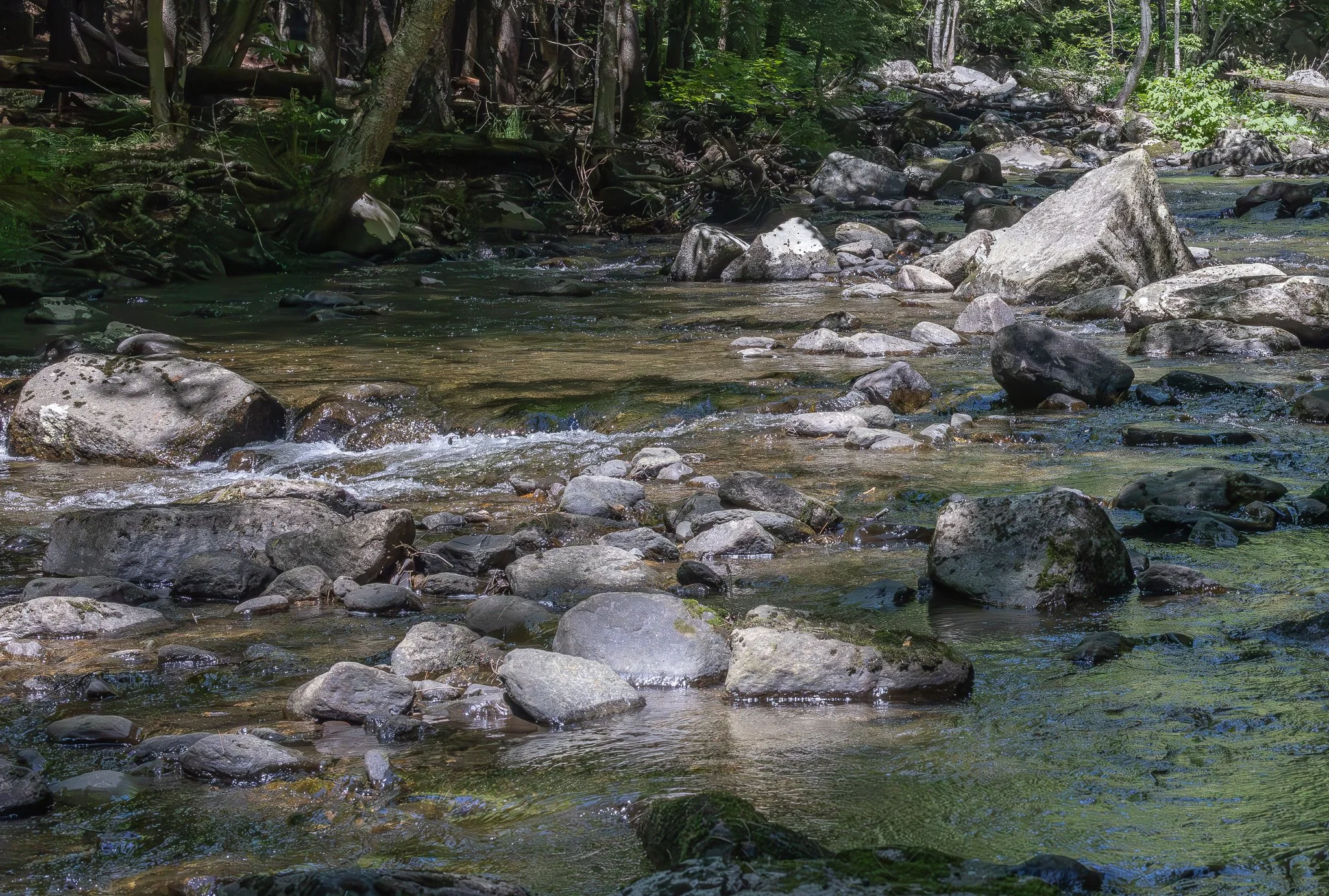
Turbulent pools, Mink Brook, Hanover, New Hampshire. I show this image to give context to the next one, which was taken just downstream. Here the surface turbulence prevents seeing the bottom. My interest is in the beds of pebbles and cobbles and the play of light upon them, within the calmer pools in the next images.
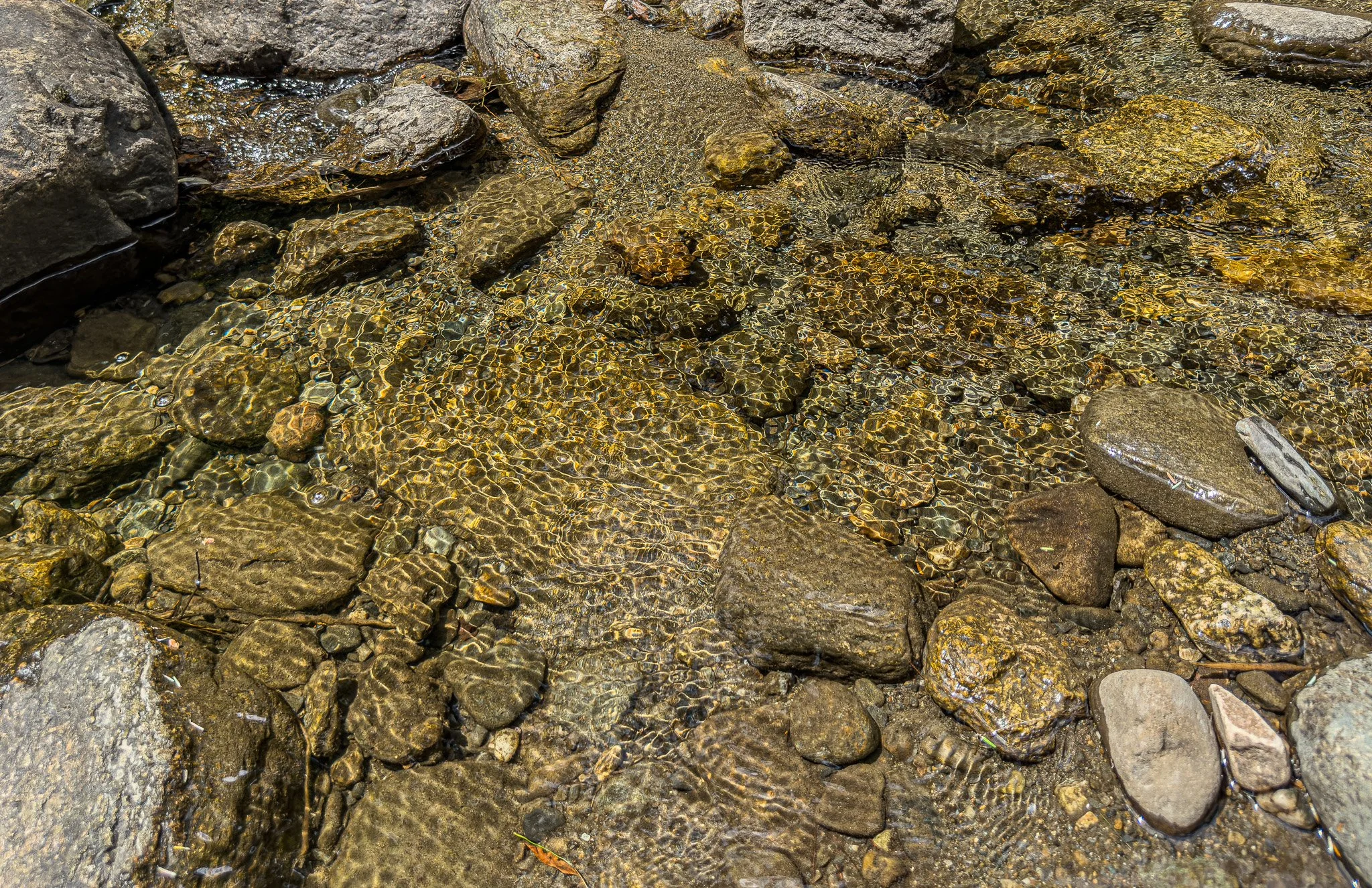
Shallow pools in Mink Brook, Hanover, NH. The bright lines are known as optical caustics, focused by the crests of waves acting as near half cylinder lenses. Between them the rocks are distorted by light refraction through wave troughs. The grid-like structure of the caustics was caused by intersecting wave trains. The bottom here comprises pebbles and cobbles of cm size.
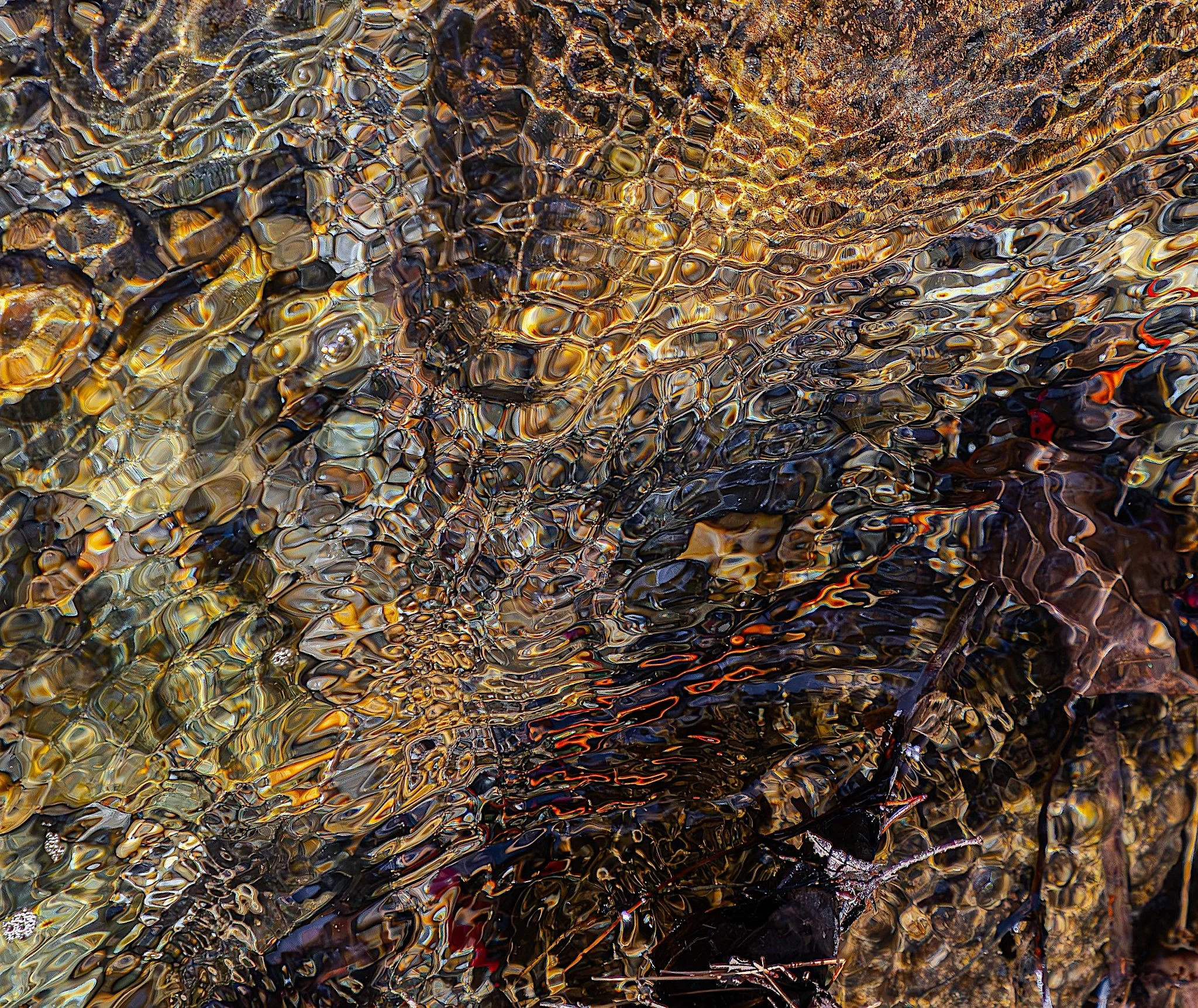
Intrusion: Mink Brook, Hanover, NH. The bright lines are known as optical caustics, focused by the crests of waves acting as near half cylinder lenses. Between them the rocks are distorted by light refraction through wave troughs. The grid-like structure of the caustics was caused by intersecting wave trains. The bottom here comprises pebbles and cobbles of cm size. The darker areas (fewer cobbles) appear to be rising and intruding the lighter areas.
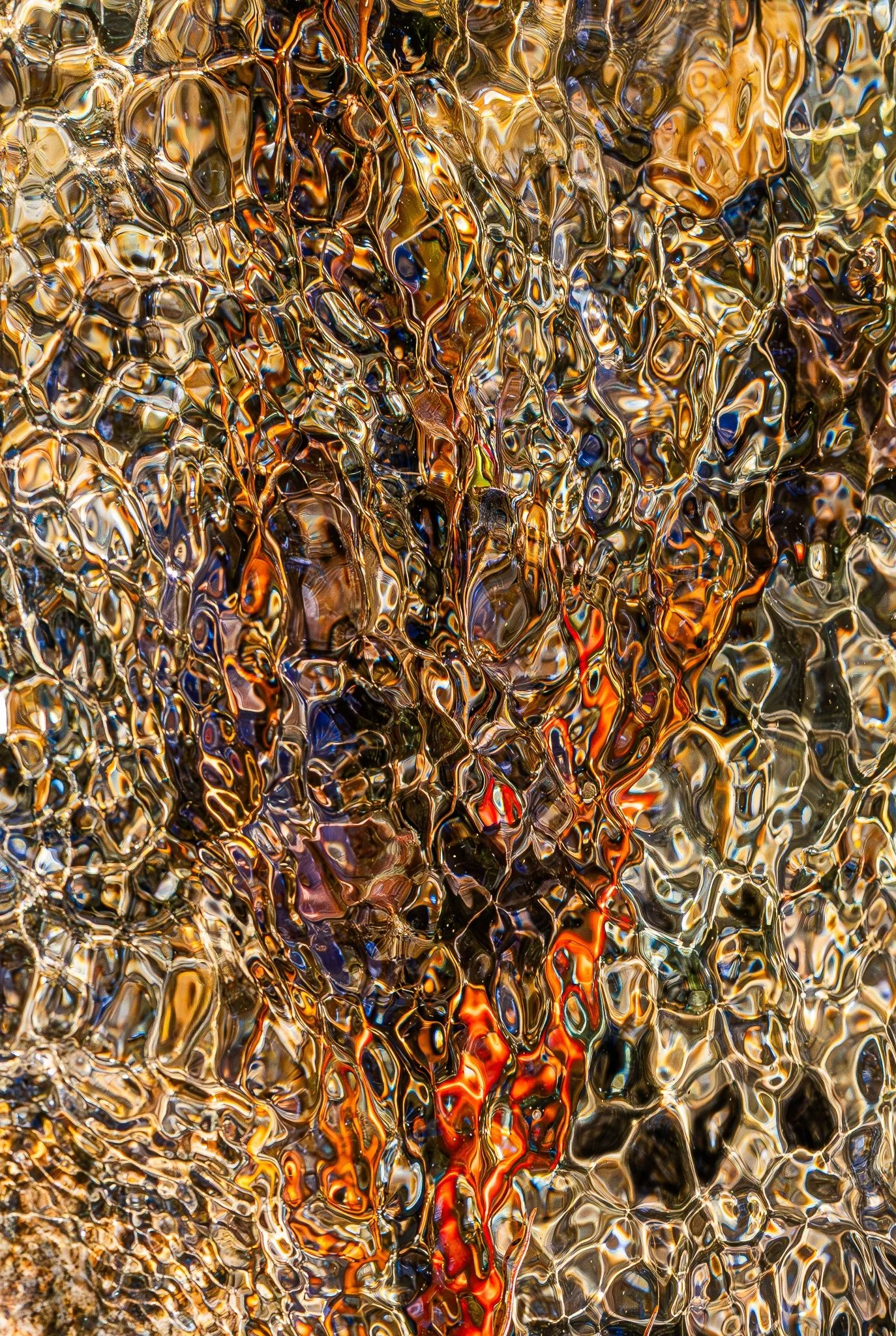
Flame: Mink Brook, Hanover, NH. The bright lines are known as optical caustics, focused by the crests of waves acting as near half cylinder lenses. Between them the rocks are distorted by light refraction through wave troughs. The grid-like structure of the caustics was caused by intersecting wave trains. The bottom here comprises pebbles and cobbles of cm size. The red streak was actually a linear plant stalk, whihc now looks like a flame.

Caustic Plume: Mink Brook, Hanover, NH. The bright lines are known as optical caustics, focused by the crests of waves acting as near half cylinder lenses. Between them the rocks are distorted by light refraction through wave troughs. The grid-like structure of the caustics was caused by intersecting wave trains. The bottom here comprises pebbles and cobbles of cm size. The light area appears like a plume rising through the image.

Tension Above The Rocks: Mink Brook, Hanover, NH. The bright lines are known as optical caustics, focused by the crests of waves acting as near half cylinder lenses. Between them the rocks are distorted by light refraction through wave troughs. The grid-like structure of the caustics was caused by intersecting wave trains. The bottom here comprises pebbles and cobbles of cm size. The nests of fine lines across the distorted cobbles are shadows of what I believe were parasitic capillary waves upon the other larger gravity waves.
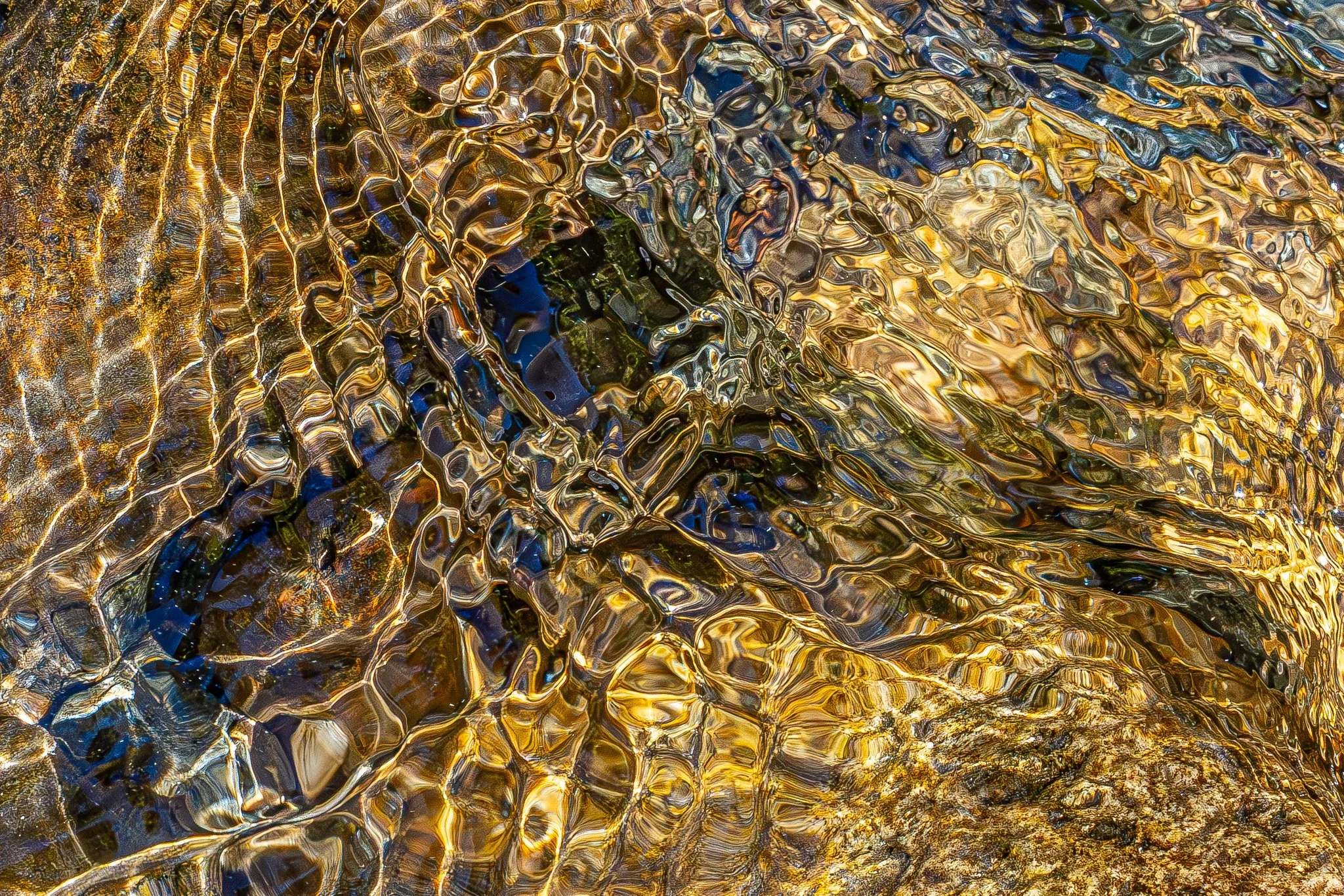
Breached: Mink Brook, Hanover, NH. The bright lines are known as optical caustics, focused by the crests of waves acting as near half cylinder lenses. Between them the rocks are distorted by light refraction through wave troughs. The grid-like structure of the caustics was caused by intersecting wave trains. The bottom here comprises pebbles and cobbles of cm size. The dark area appears to be breaching the lighter areas.

Bedazzled: Mink Brook, Hanover, NH. The bright lines are known as optical caustics, focused by the crests of waves acting as near half cylinder lenses. Between them the rocks are distorted by light refraction through wave troughs. The grid-like structure of the caustics was caused by intersecting wave trains. The bottom here comprises pebbles and cobbles of cm size. I find the color spectrum, covering purple, bedazzling.

Optimal Delusion: Kidder Brook, New London, NH. The bright lines are known as optical caustics, focused by the crests of waves acting as near half cylinder lenses. Between them the rocks are distorted by light refraction through wave troughs. The grid-like structure of the caustics was caused by intersecting wave trains. The bottom here comprises pebbles and cobbles of cm size.
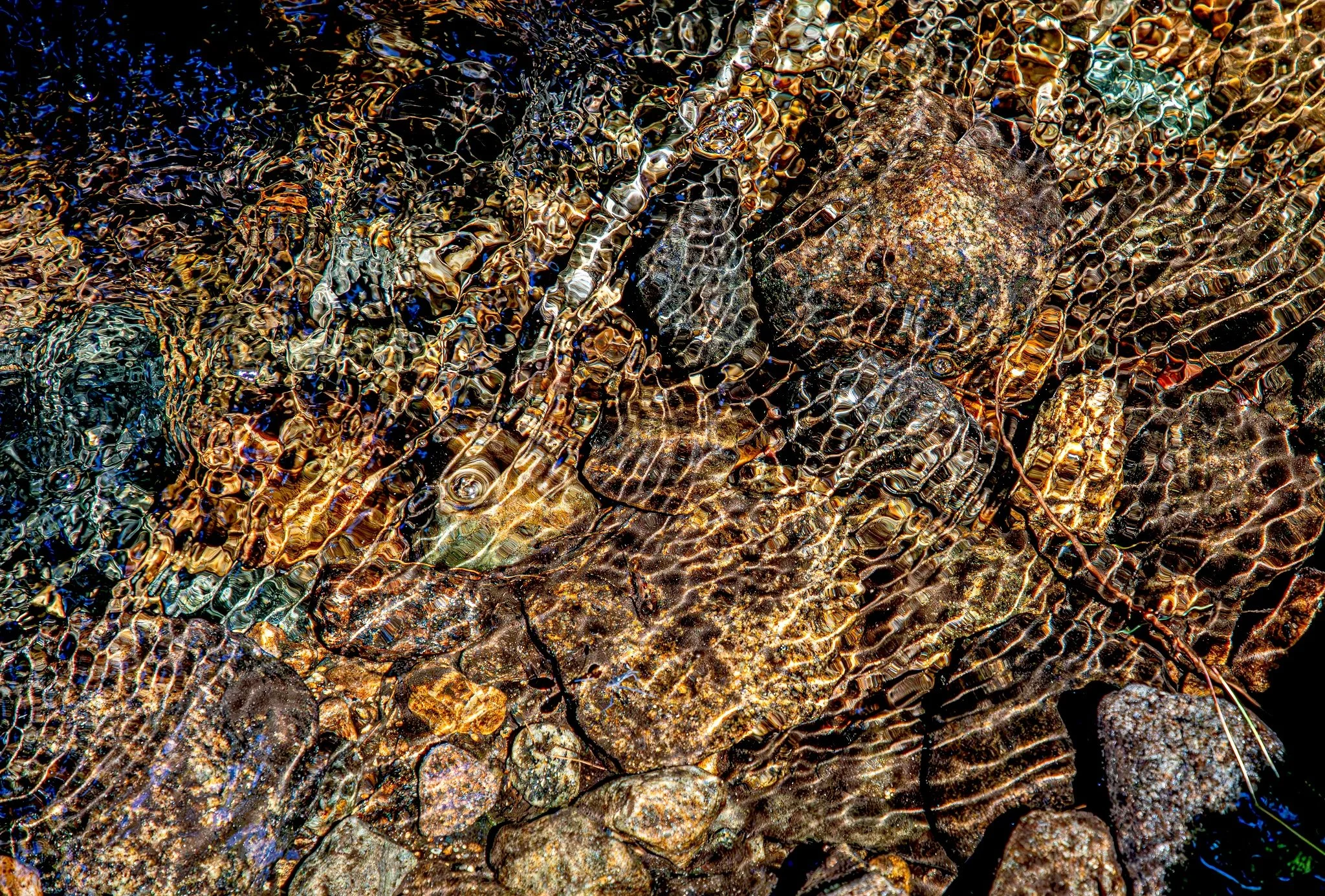
Causticity: Kidder Brook, New London, NH. The bright lines are known as optical caustics, focused by the crests of waves acting as near half cylinder lenses. Between them the rocks are distorted by light refraction through wave troughs. The grid-like structure of the caustics was caused by intersecting wave trains. The bottom here comprises pebbles and cobbles of cm size. A close look at lower center of left will find the oval shadows of the aerated parts of a water strider's legs in contact with water. They are oval because of oval capillary fringes.
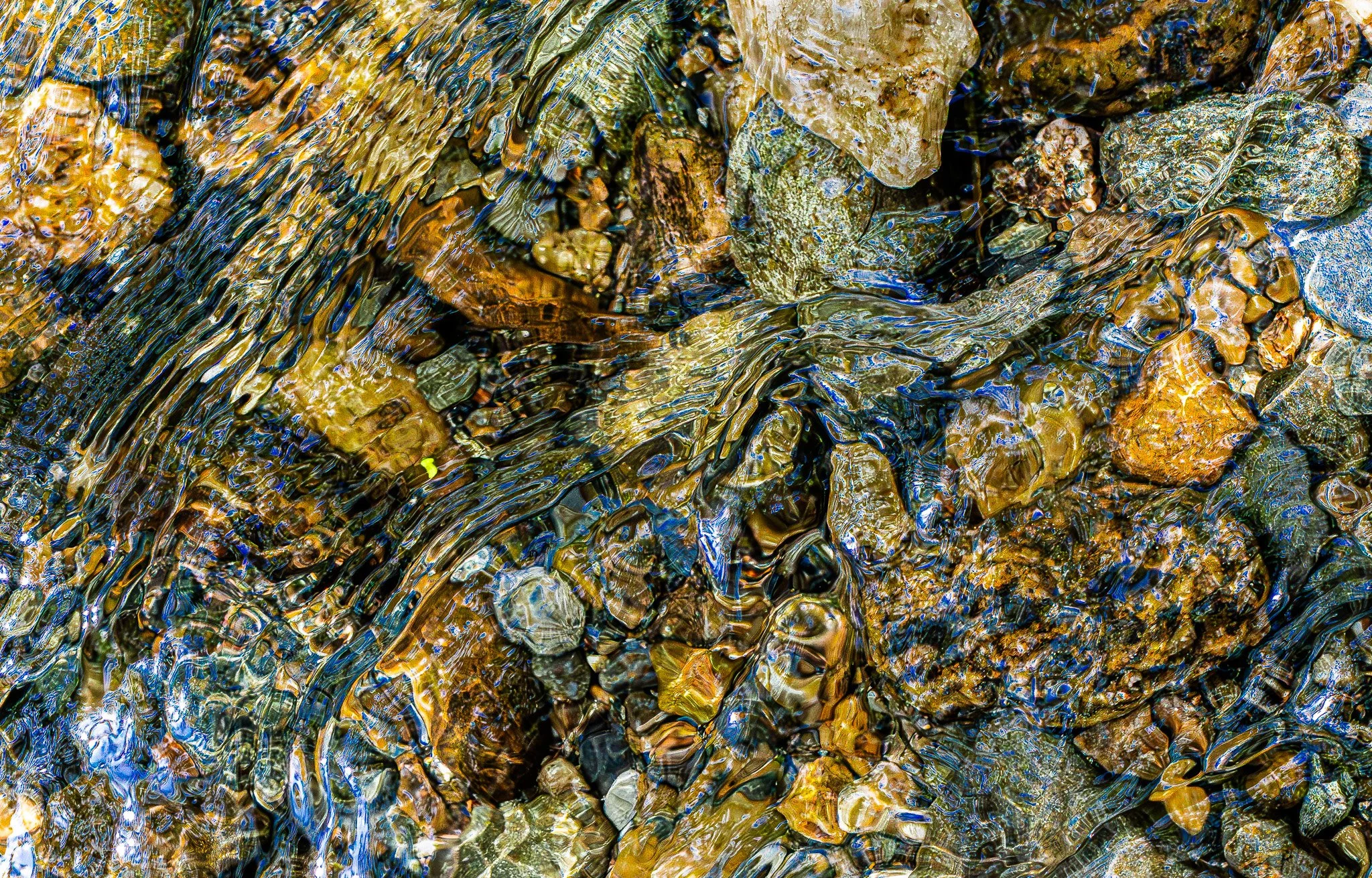
Under Wave Trains: Mink Brook, Hanover, NH. The bright lines are known as optical caustics, focused by the crests of waves acting as near half cylinder lenses. Between them the rocks are distorted by light refraction through wave troughs. The grid-like structure of the caustics was caused by intersecting wave trains. The bottom here comprises pebbles and cobbles of cm size. Here there are two distinct but short surface wave trains

Rock-Bottom Bonanza: Mink Brook, Hanover, NH. The bright lines are known as optical caustics, focused by the crests of waves acting as near half cylinder lenses. Between them the rocks are distorted by light refraction through wave troughs. The grid-like structure of the caustics was caused by intersecting wave trains. The bottom here comprises pebbles and cobbles of cm size.

Candlewood Brook: Brook feeding Candlewood Lake, New Milford, CT. The bright lines are known as optical caustics, focused by the crests of waves acting as near half cylinder lenses. Between them the rocks are distorted by light refraction through wave troughs. The grid-like structure of the caustics was caused by intersecting wave trains. The bottom here comprises pebbles and cobbles of cm size. In this case bottom vegetation dominated bottom imaging pebbles and cobbles.