Woodland Brooks
Woodland Brooks in New England (and of course, elsewhere) range from early spring raging torrents tens of yards wide like Hubbard Brook in West Thornton, NH, to narrow, boulder-dominated, debris-obstructed, step-pool brooks flowing down steep hillsides, to well-confined streams, pools and cascades. Skinner Brook in Grantham, NH is an example of the latter and which I have been photographing during fall of 2026. This is a work in progress because winter is when I’m looking for exotic crystalline ice formations.
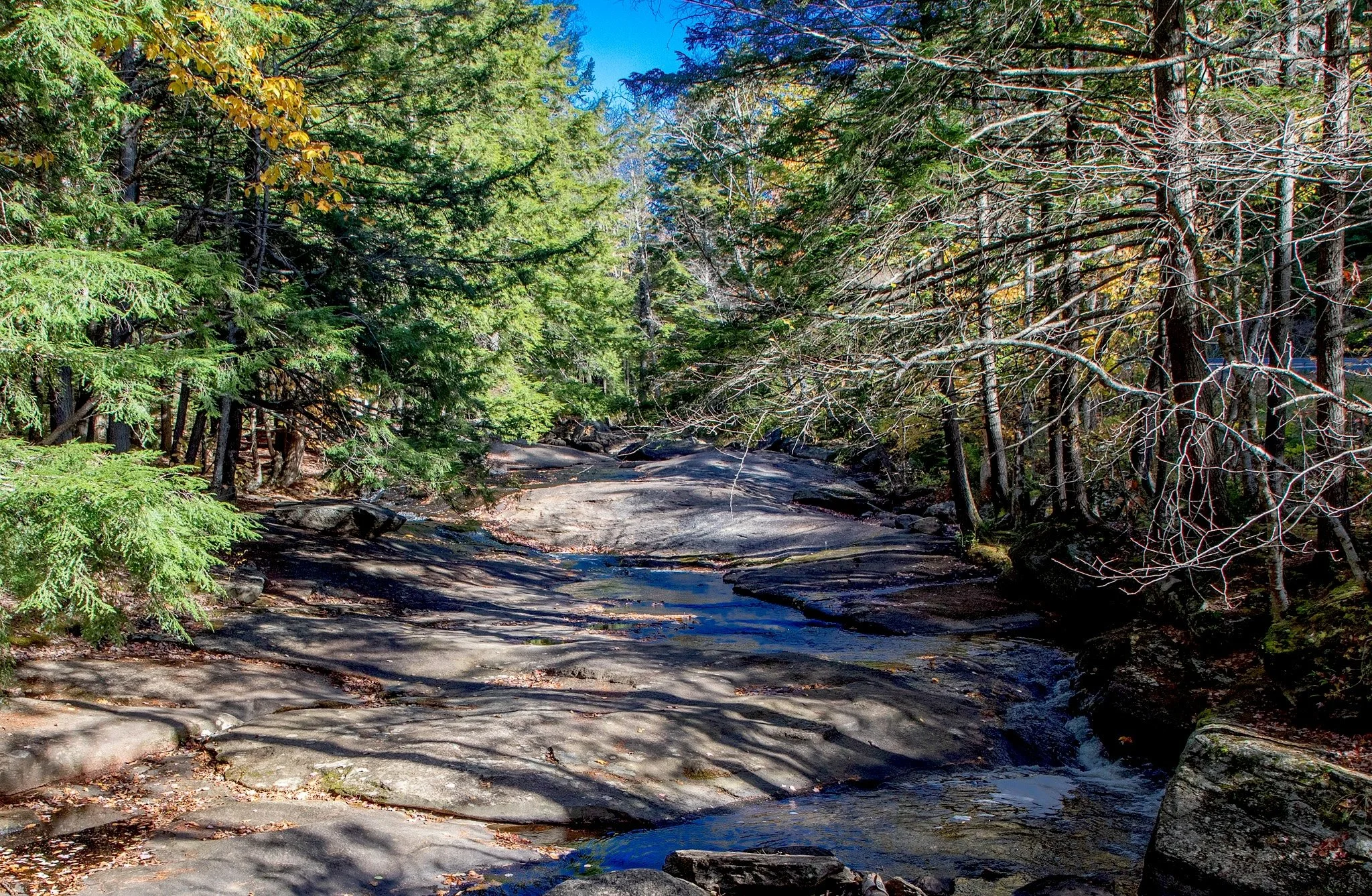
Skinner Brook, Brookside Park, Grantham, NH: View is of about 300 feet looking north from the park bridge. By path there is about 1/4 mile of access. This section has several cascades, short falls and rapids that approach the falls.
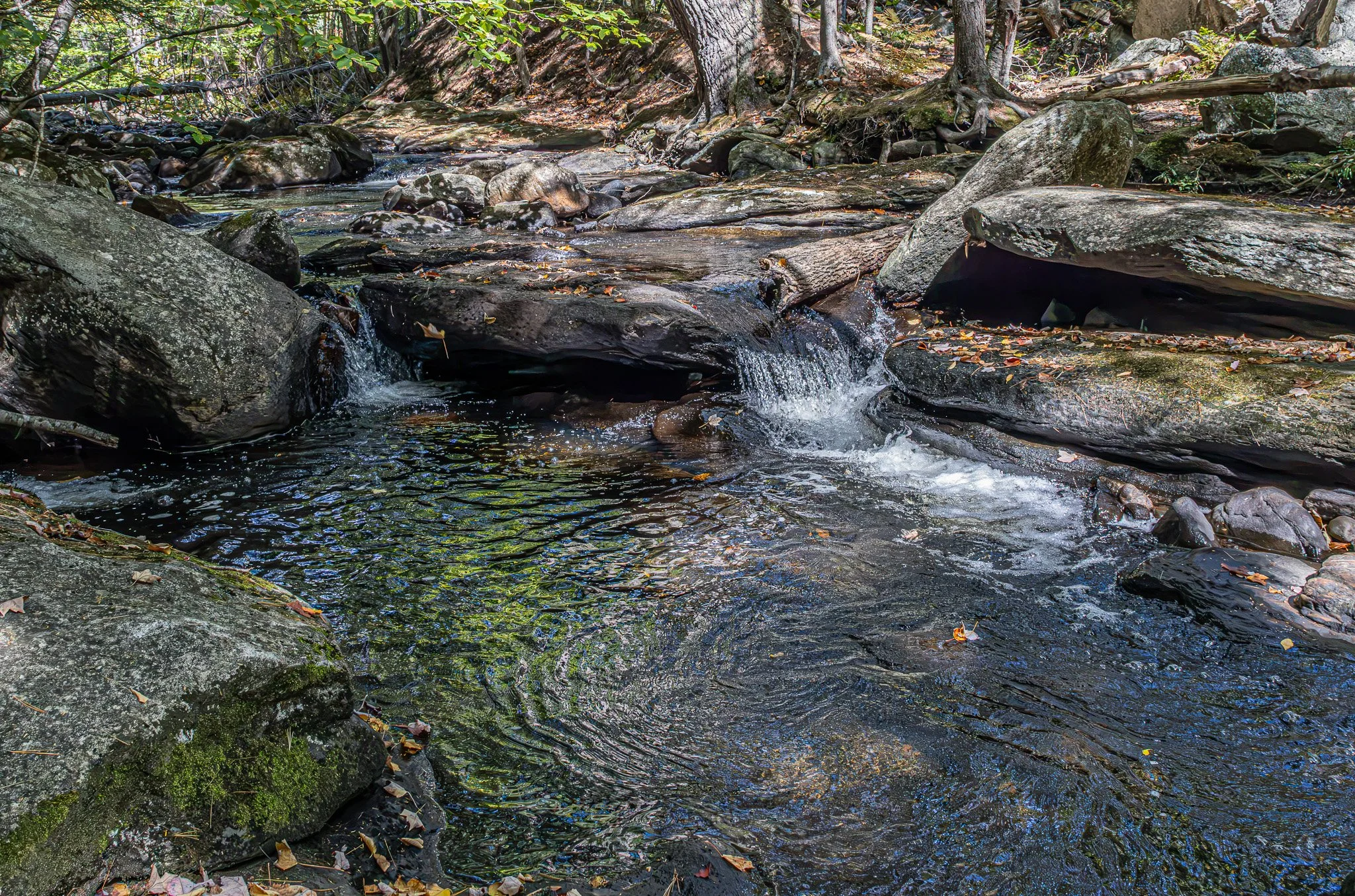
Skinner Brook Falls at 300 ft distance from bridge, imaged Sept 25, 2026, just before Peak foliage in this region of New Hampshire.
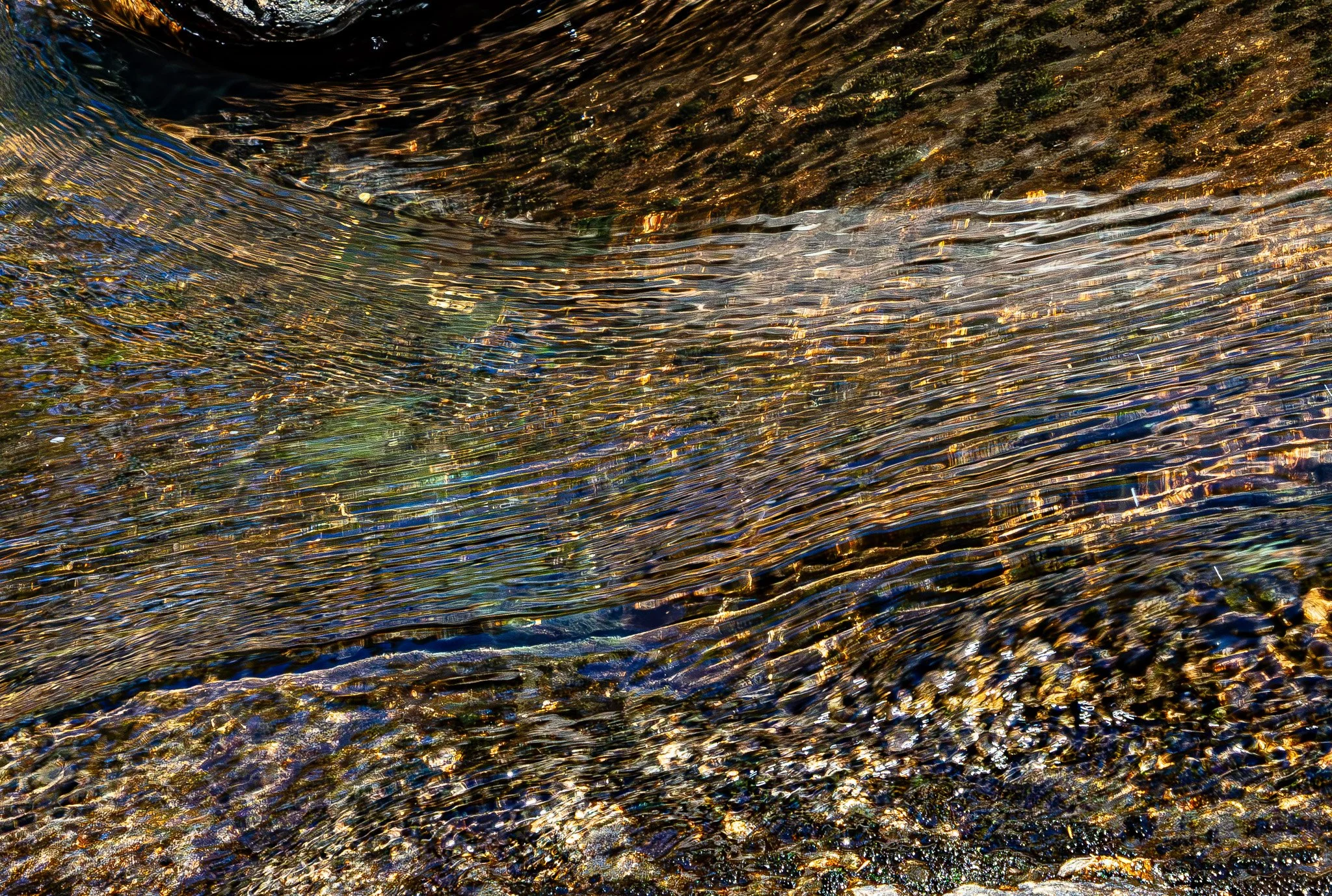
Convergences of two shooting flows in Skinner Brook: The longitudinal crests are not waves but the result of aligned turbulent eddies when rapid flow occurs. The depths here and elsewhere never exceeded one foot and stream speeds maxed at about 4 mph at edge of falls.
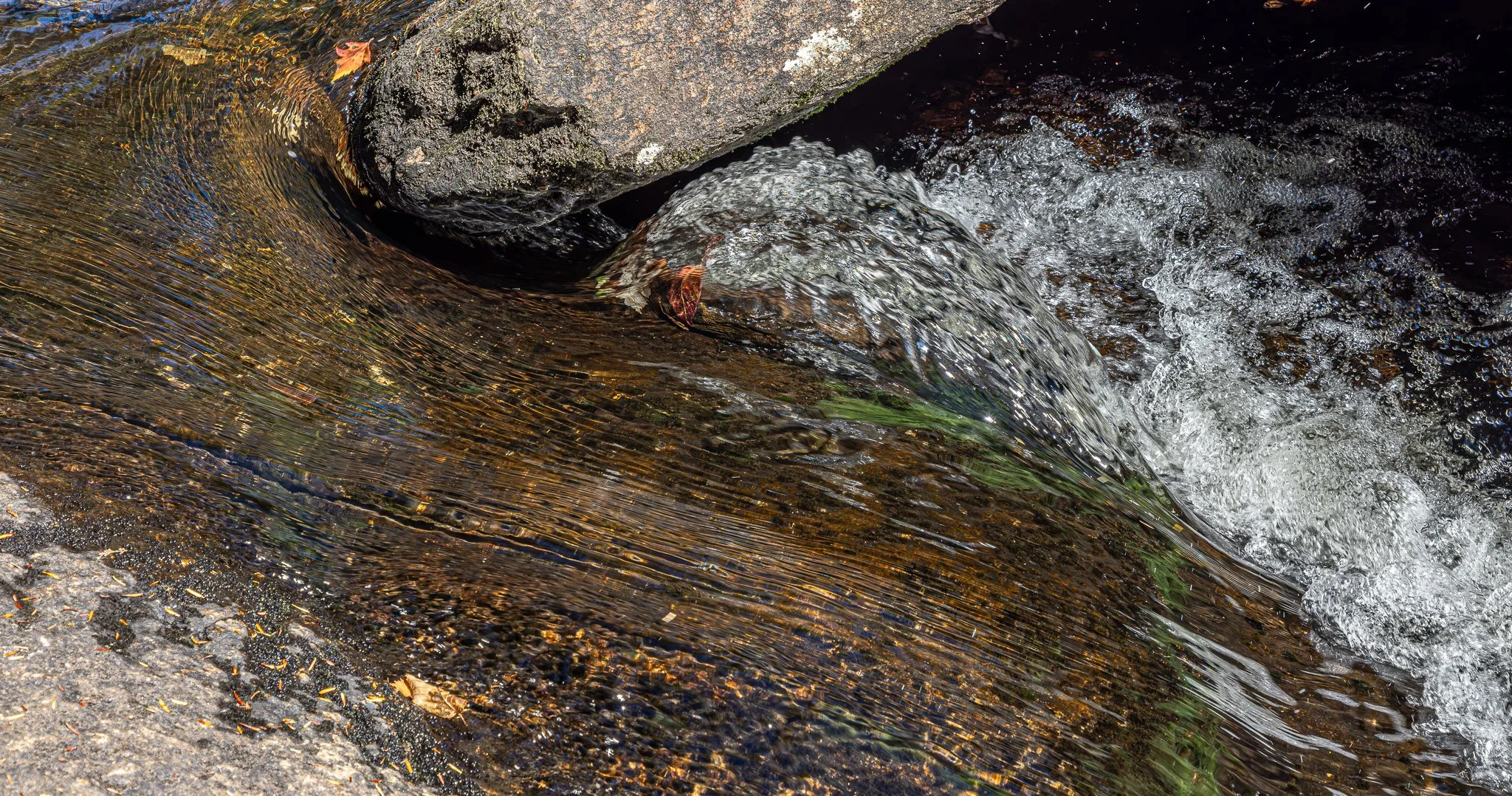
Shooting flow in Skinner Brook: A different view of the previous image. When flow gets too fast it becomes turbulent, and in the image and of course, at the bottom, of falls.
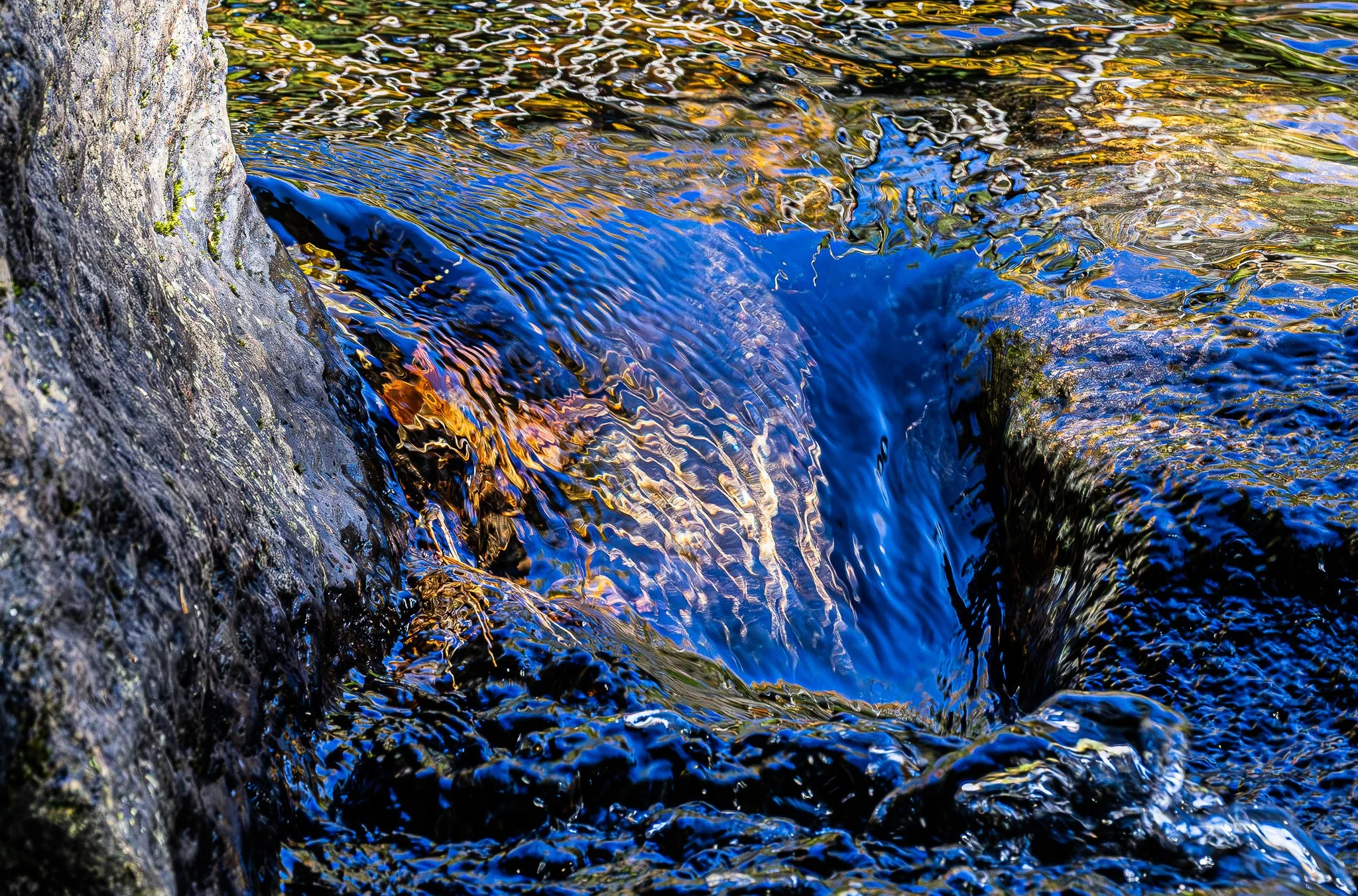
One of several falls of Skinner Brook
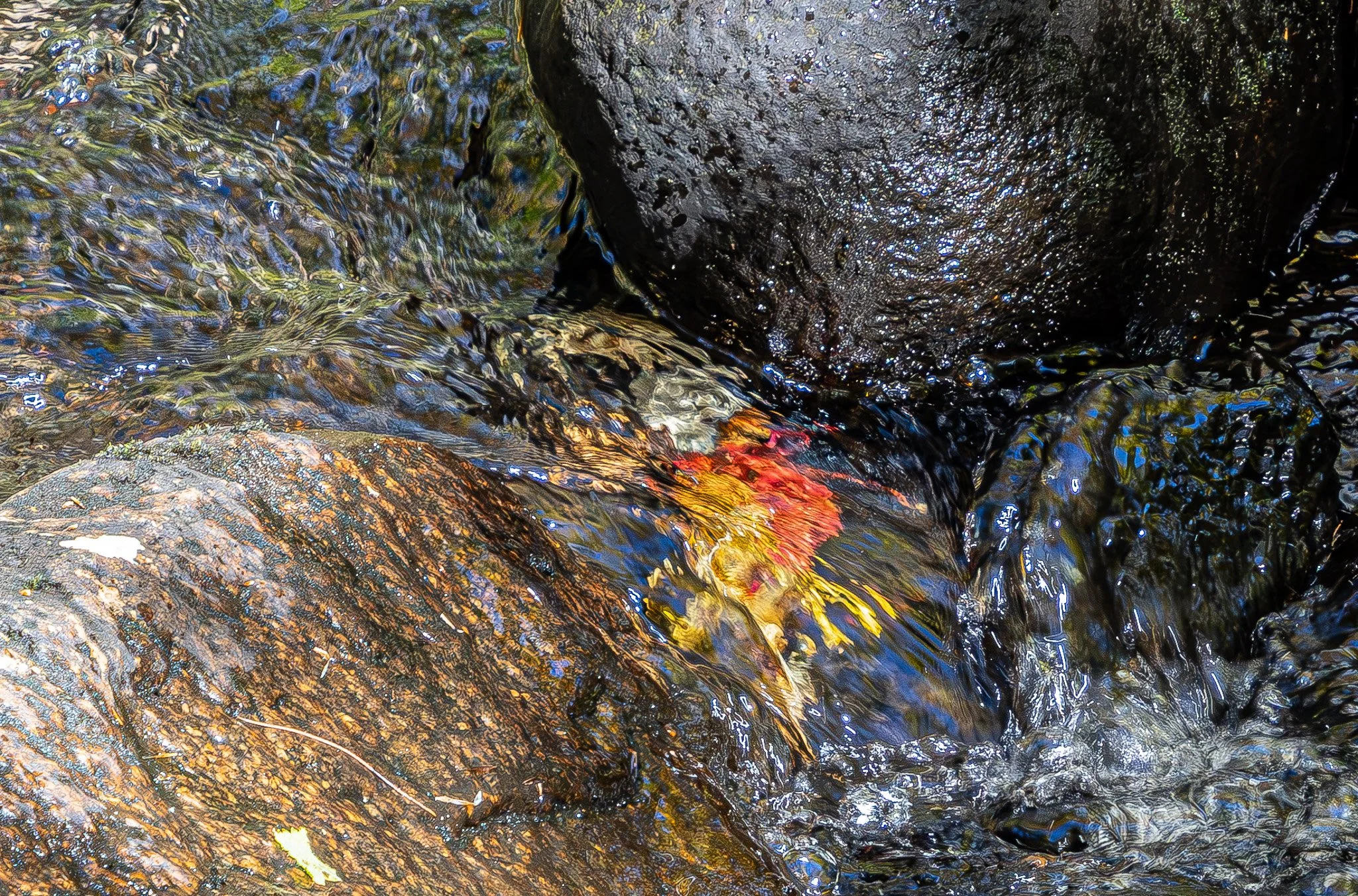
Another of Skinner Brook's falls, this one with leaves temporarily caught below.
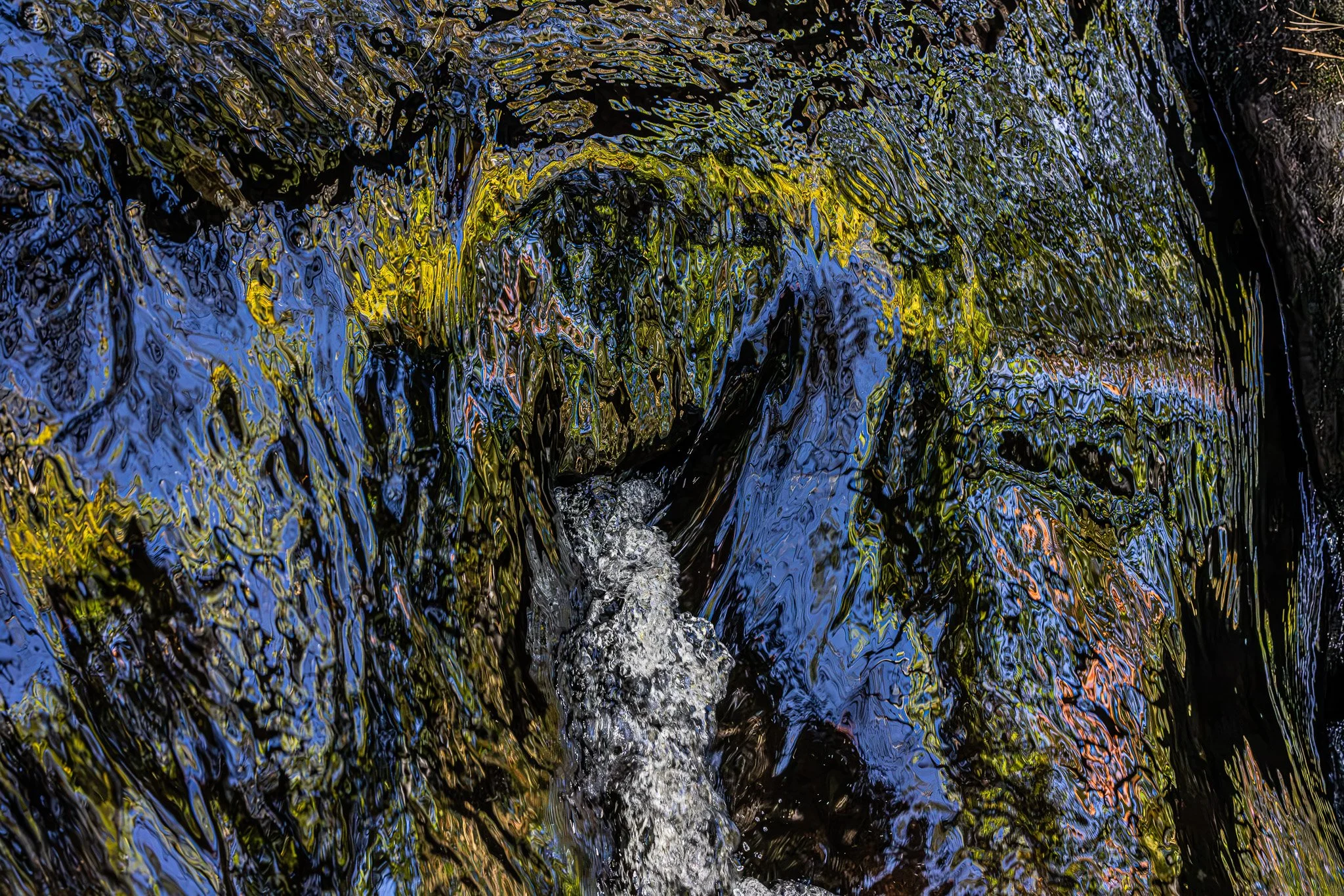
Overhead view of a small horseshoe shaped falls along Skinner Brook.
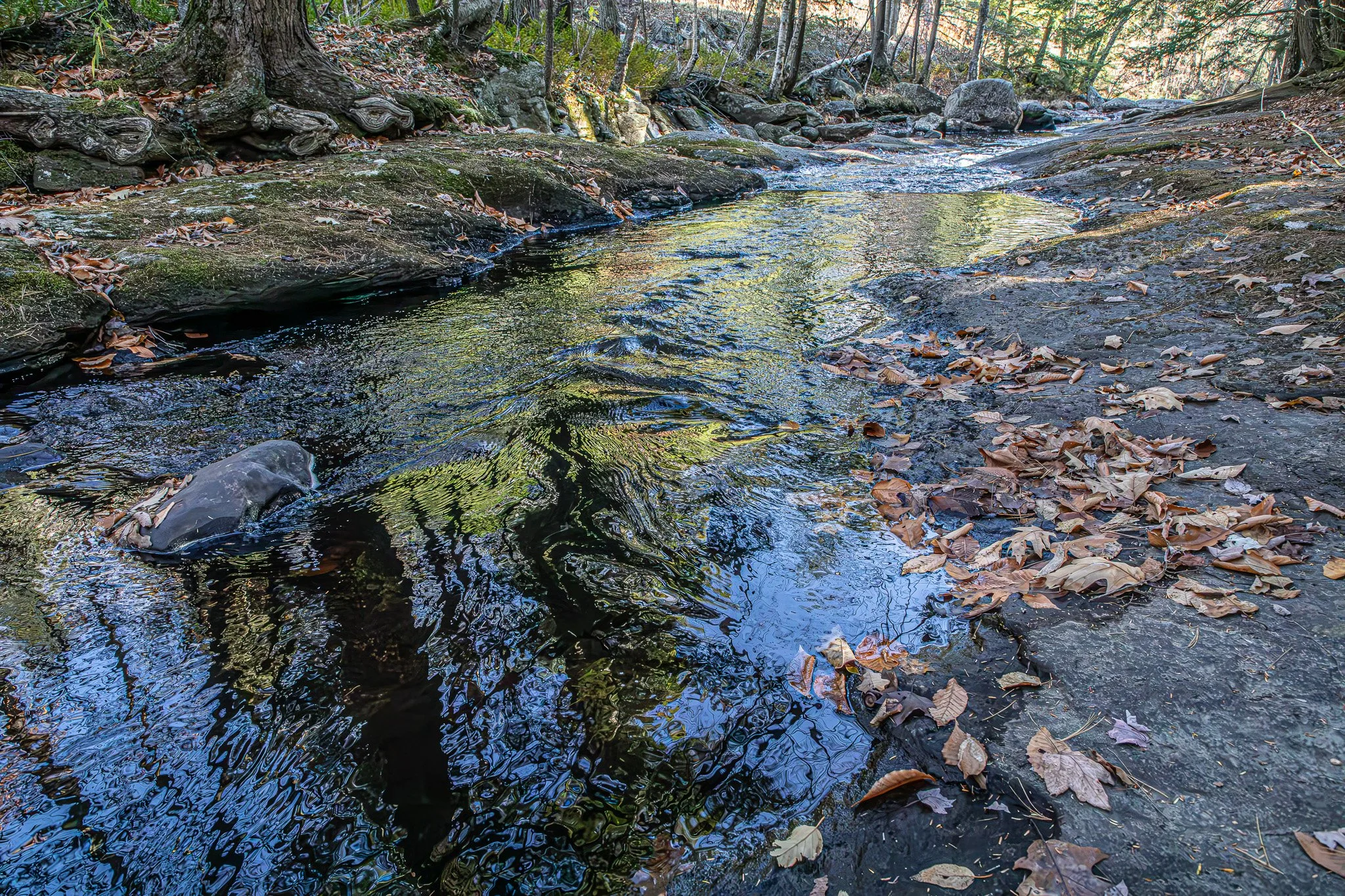
Down-flow view below on of Skinner Brook's falls. Yellow is from overhead poplars and birches to the left (west side) and blue is from the sky.
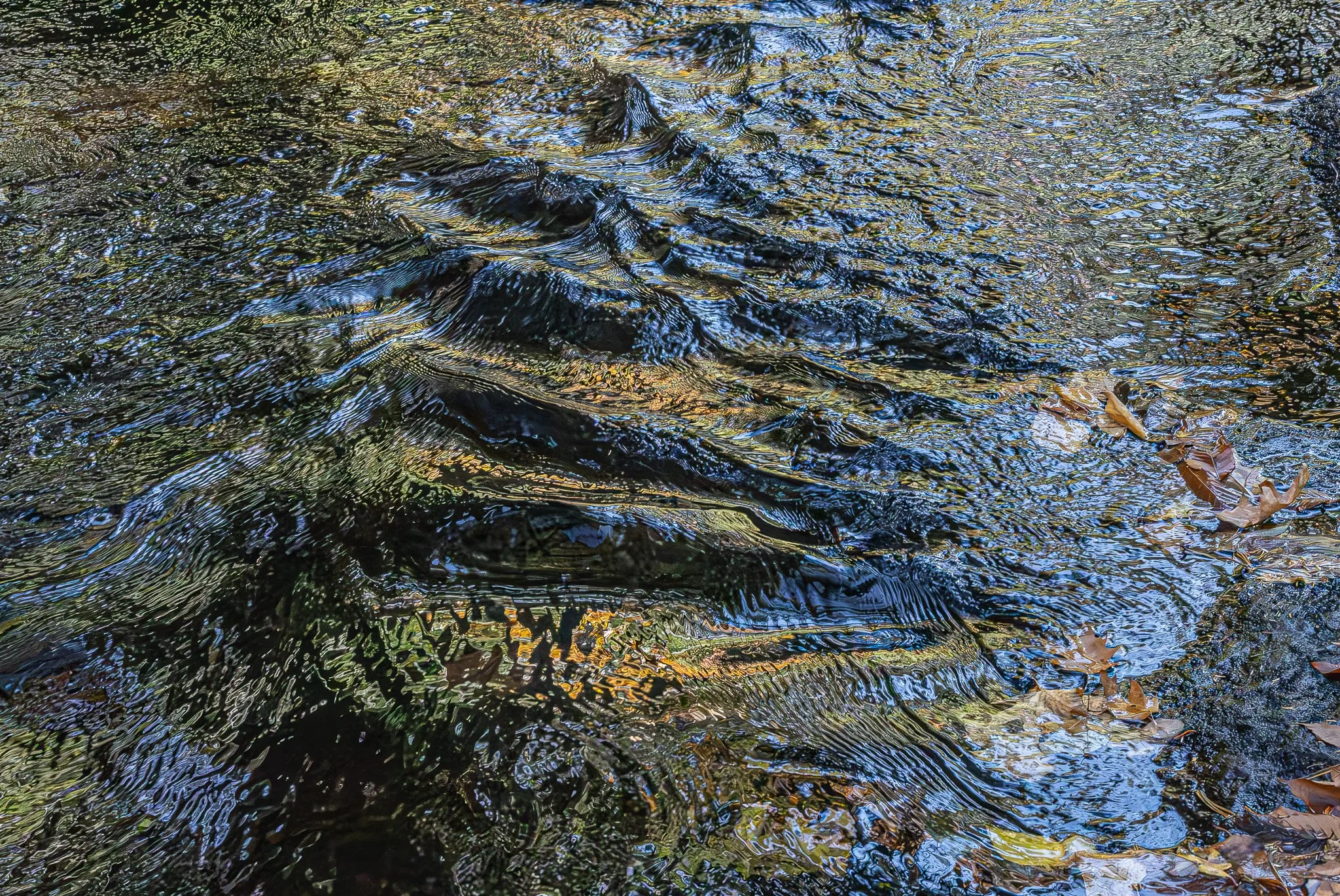
Waves propagating downstream, essentially a detail form previous image. As opposed to propagating waves, many wave trains were standing, i.e., moving upstreams against flow because of a submerged "hydraulic jump," caused by a sudden change in water depth (see next image). Note the stream flow ridge along the waves and the scalloped trochoidal shapes.
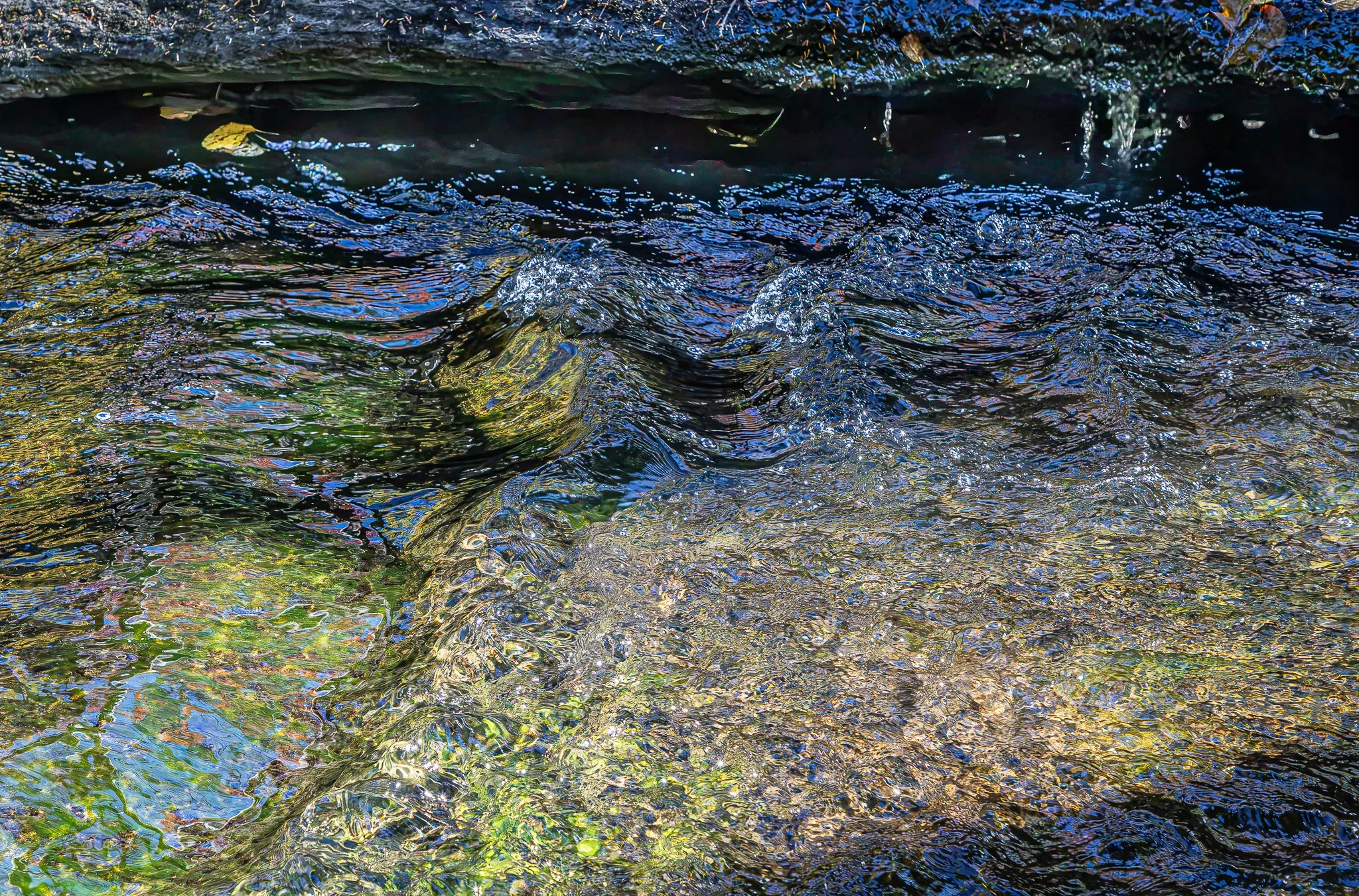
Standing trochoidal hydraulic waves in Skinner Brook. Flow is left to right and waves are "trying" to move right to left.
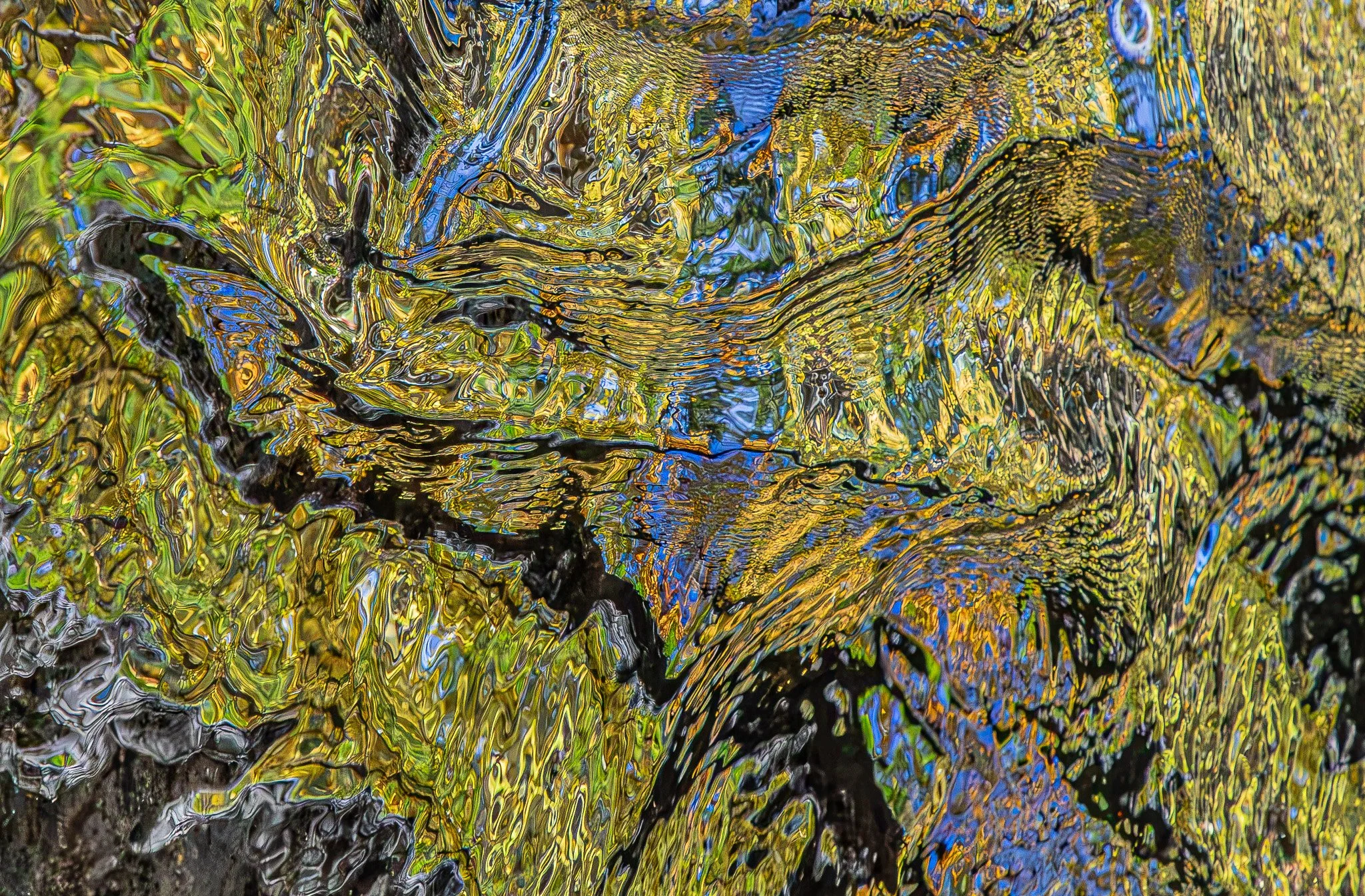
Crazy for Abstracts (1): There are many wave trains here, including those of capillary waves at top, and distorted flows at bottom. the artist Klimt might have liked this.
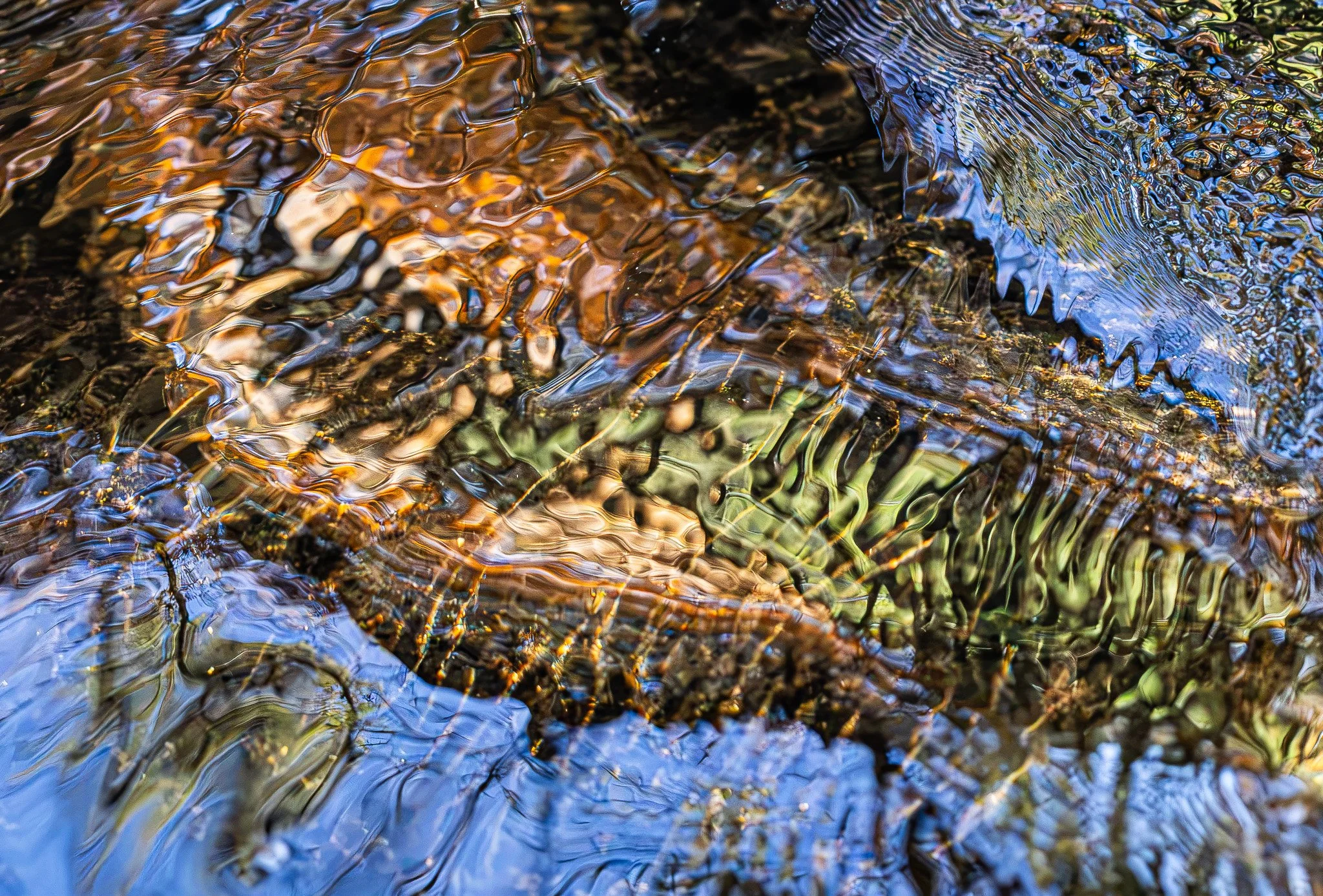
Crazy for Abstracts (2): I call this one the caterpillar. These odalisque images occurred along sides of the less steep troughs of the gentler non-trochoidal gravity wave.
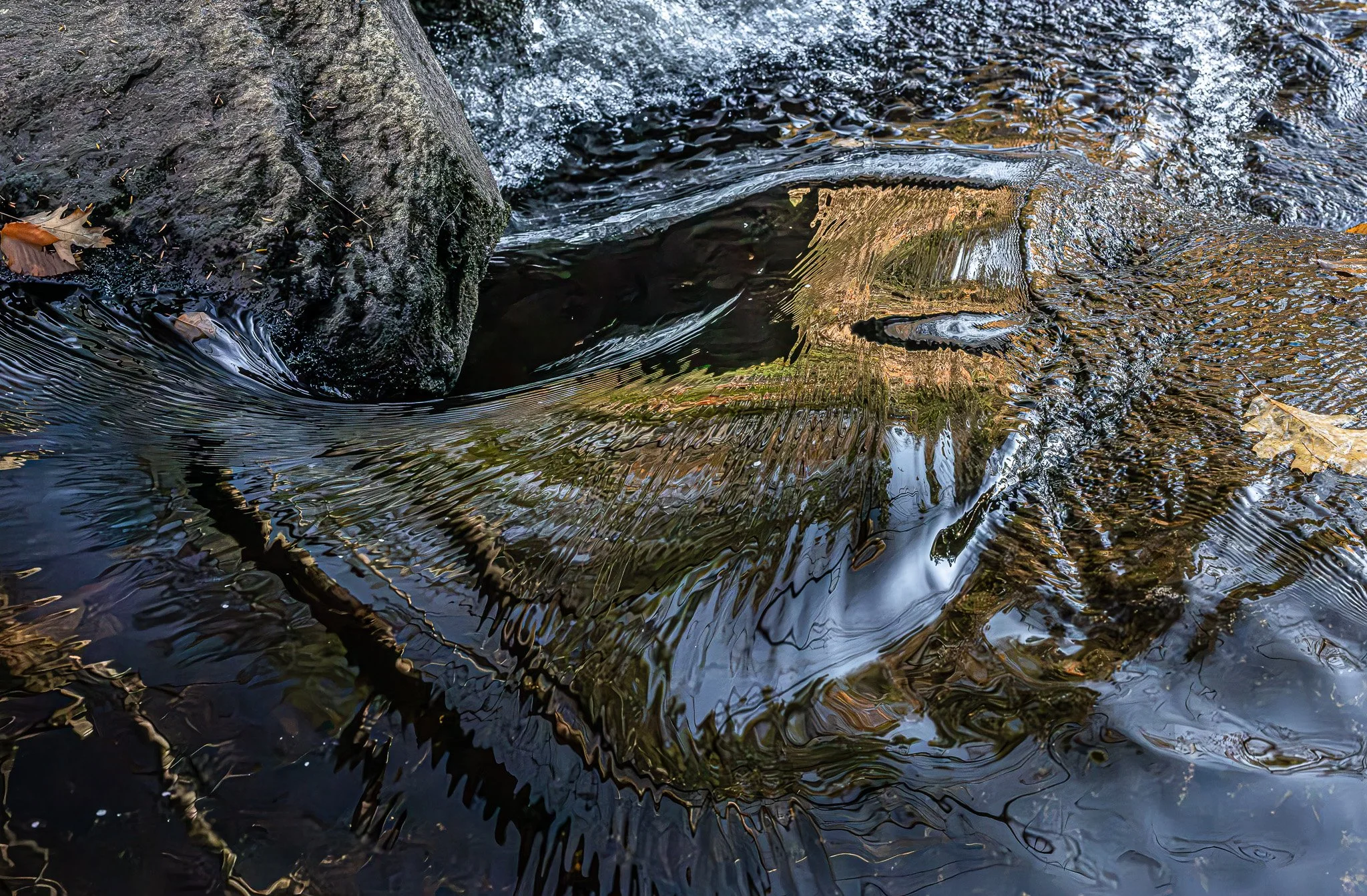
Crazy for Abstracts (3): Here shooting flow past a boulder reflects the overlooking vegetation. The thin blue line near the top is the edge of a fall, whose turbulence is seen along the top edge.
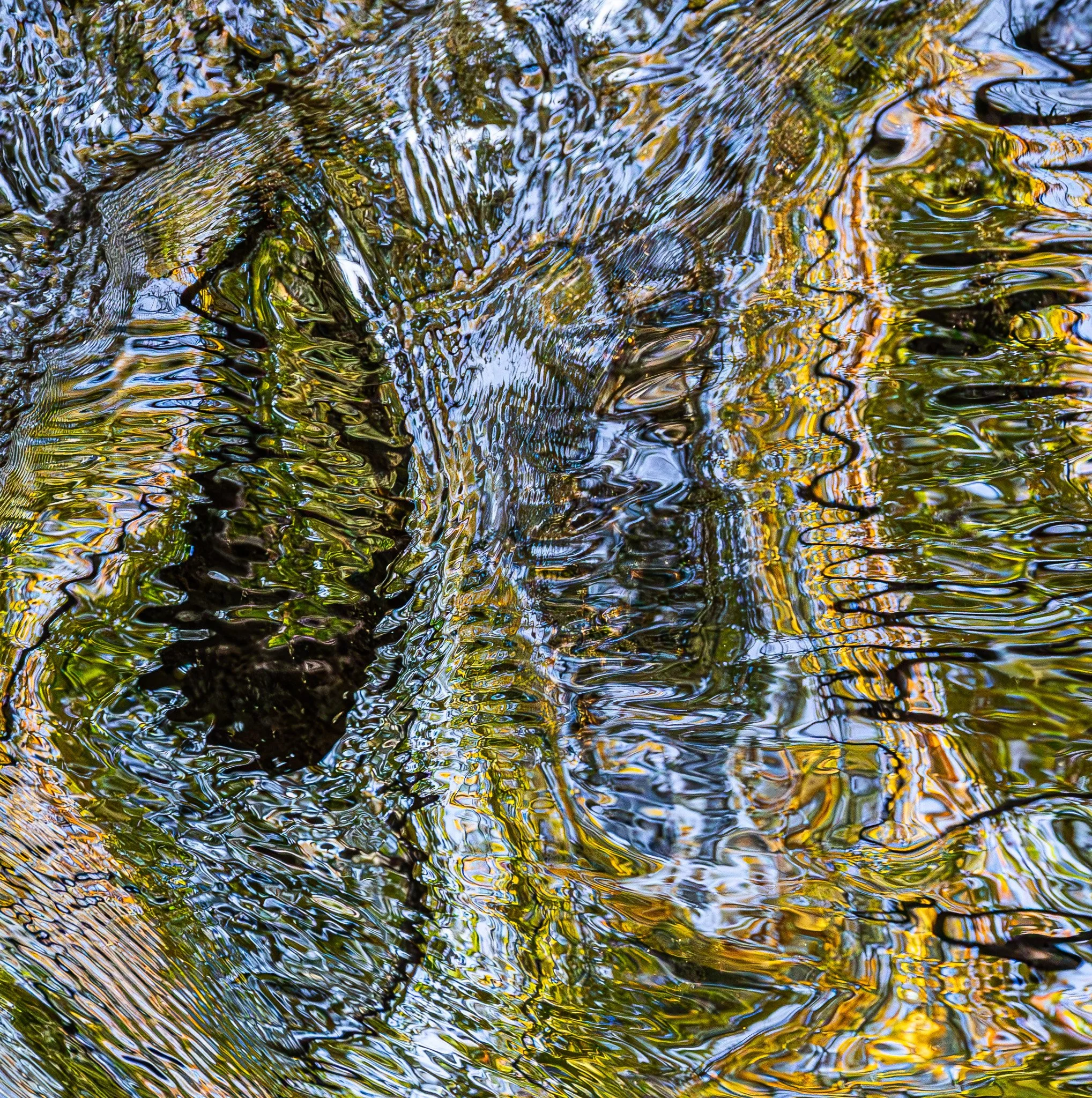
Crazy for Abstracts (4): Skinner brook reflections from a limited set of non-trochoidal troughs and crescents. Is the thin black wavy line an anti-caustic?
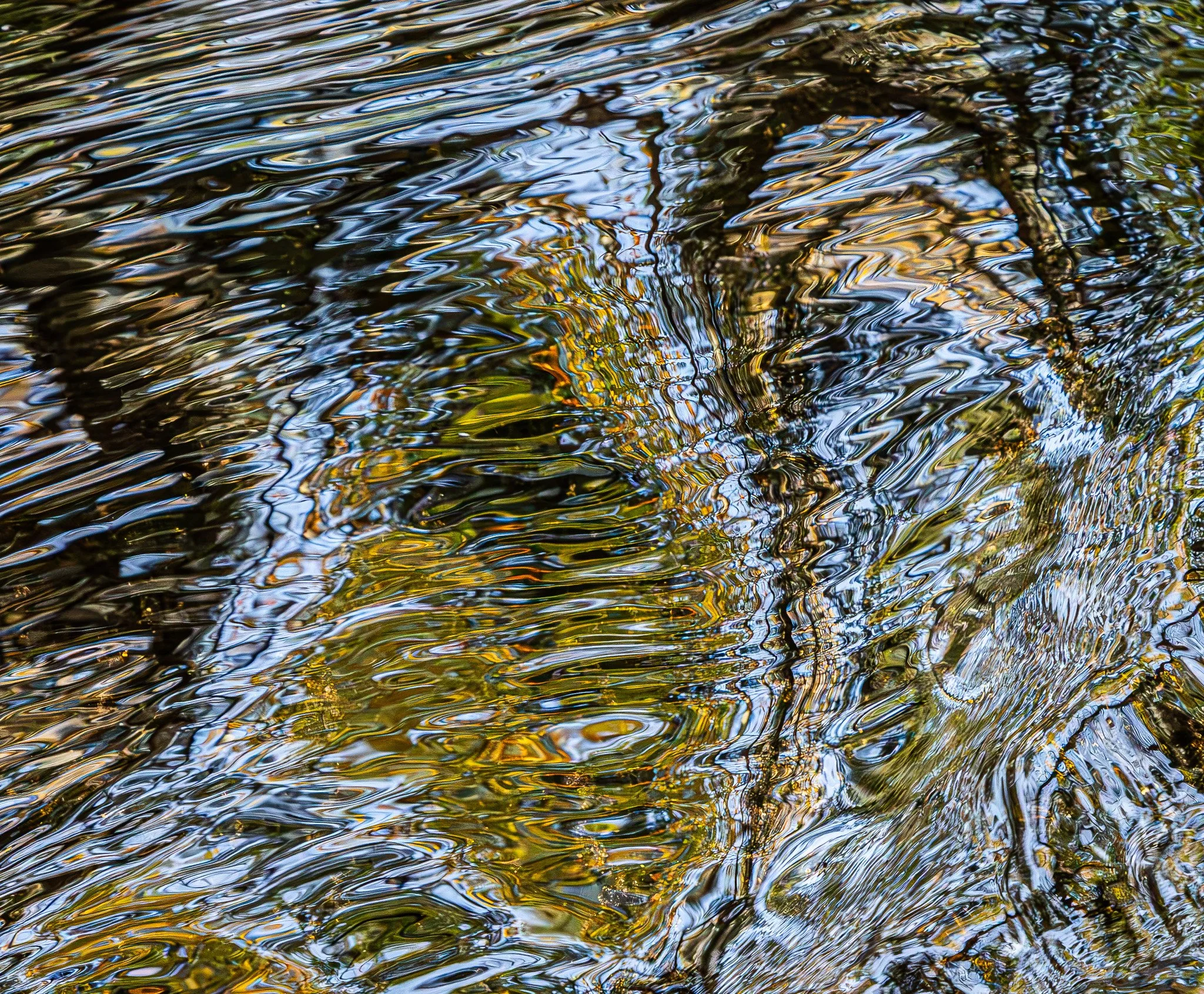
Crazy for Abstracts (5): Image from same area as previous image.
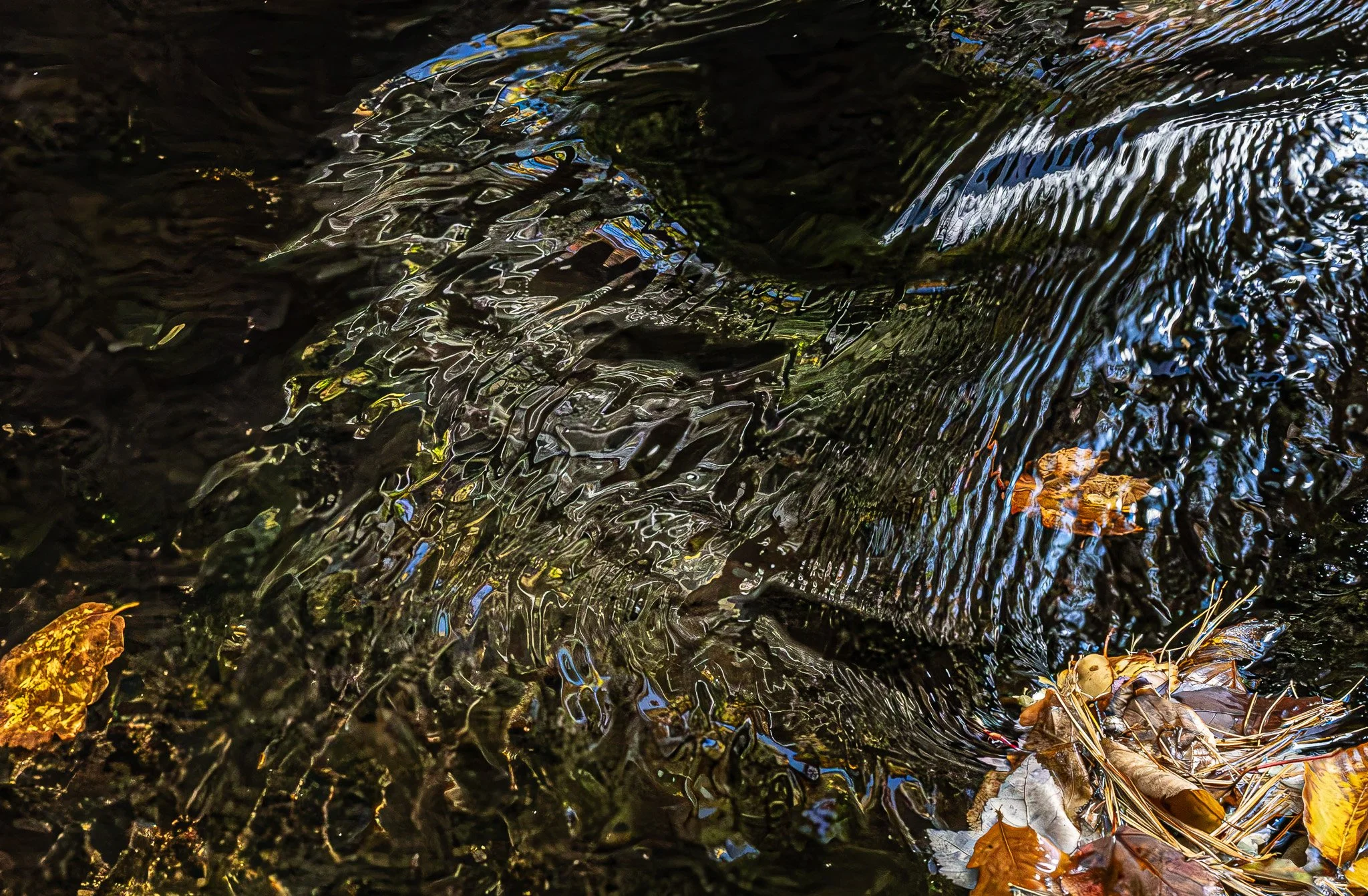
Crazy for Abstracts (6): This mosaic occurred on a cascade, part of which exhibited shooting flow.