Puddles
The main seeds for puddle ice were created upon the cold surfaces of pebbles, rocks, and leaves along the edge and in the middle of the puddle. Puddle ice formed the same way as in ruts, eventually contracting during cold snaps or sagging to make stress contours. The large puddles were photographed in November 2014; the Driveway puddles during early March 2021.

A dried erratically shaped puddle, which lost its water to the ice sheet that covered it. The contoured rings are stress fractures caused by contraction from grounding lines, and/or the weight of the ice as it lost its water support. The cracks then widened y sublimation, which made them apparent. Total length was about 2m.

Detail of a Puddle among Rocks and Showing Stars: A close look will find star formations and other spicules frozen into the sheet. The rings are stress fractures. The circles may be related to joints between fractures.
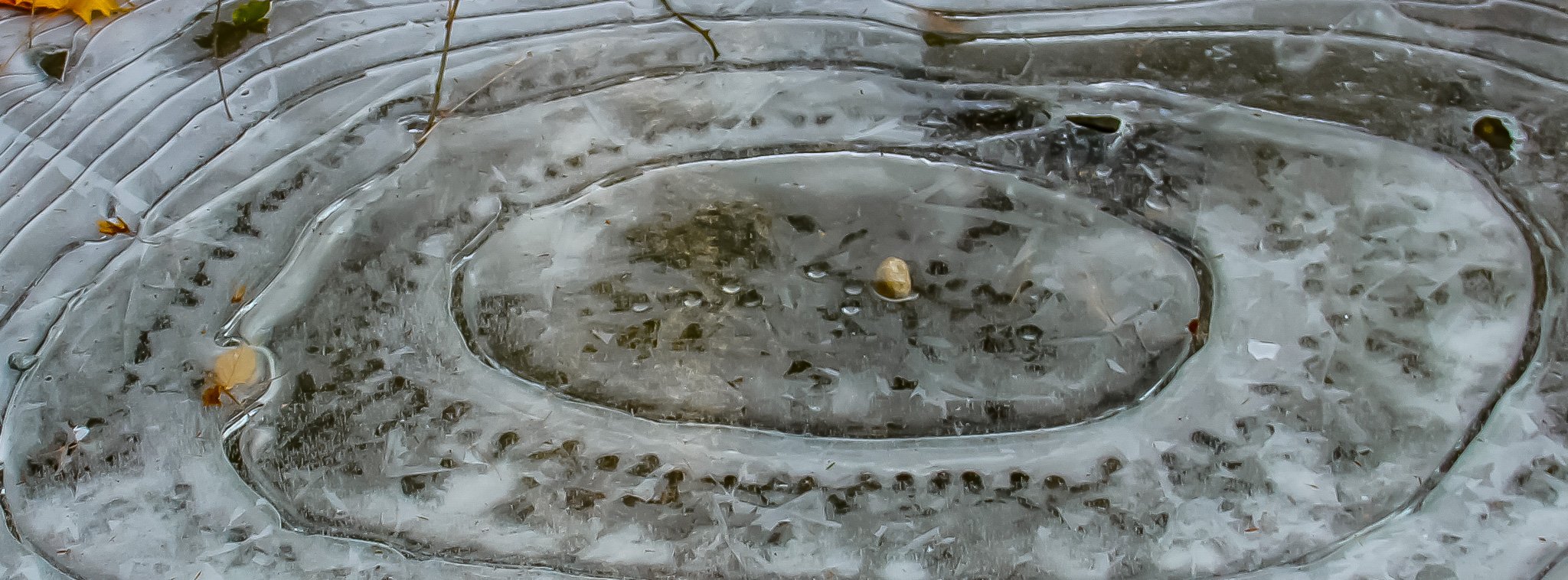
Detail of a Rectangular Puddle Showing a Ring of Holes: This full puddle is shown elsewhere here. The holes were filled with clear ice which had air bubbles. Why they formed is unclear but are surely related to stress because they are concentric with the rings.
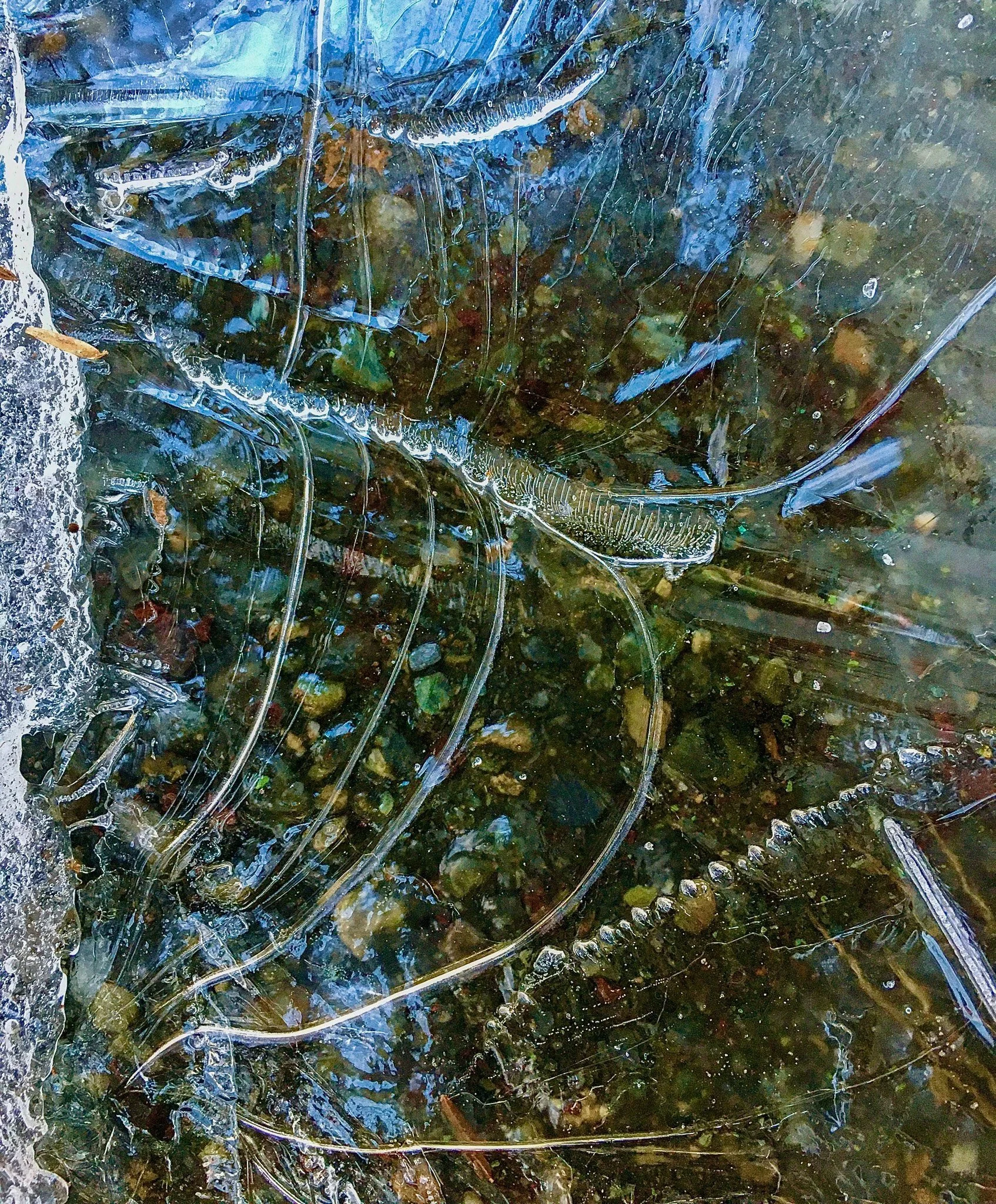
Driveway Puddle A: My driveway images show ice formed on a small shallow puddle on my old rough driveway. There are interesting dendritic formations, and curled fractures caused by stress around rough sections or small pebbles. These driveway images are of areas about 30 cm wide.

Driveway Puddle B: Sunlit Fractures Within Black Ice Upon Pebbles: The area was 7 cm wide in the horizontal direction. The fractures were caused by sagging when the water beneath detached from the ice. They are curvilinear because of the ice's detachment from pebbles and grounding edges. Sublimation rounded the fracture edges and so they scattered sunlight.

Driveway Puddle C: More detail of the fine ring fractures. They appear to have some width but that might really be light reflecting from within the fracture, as commonly seen on big lake fractures when ice is clear. The image is of an area about 15 cm wide.
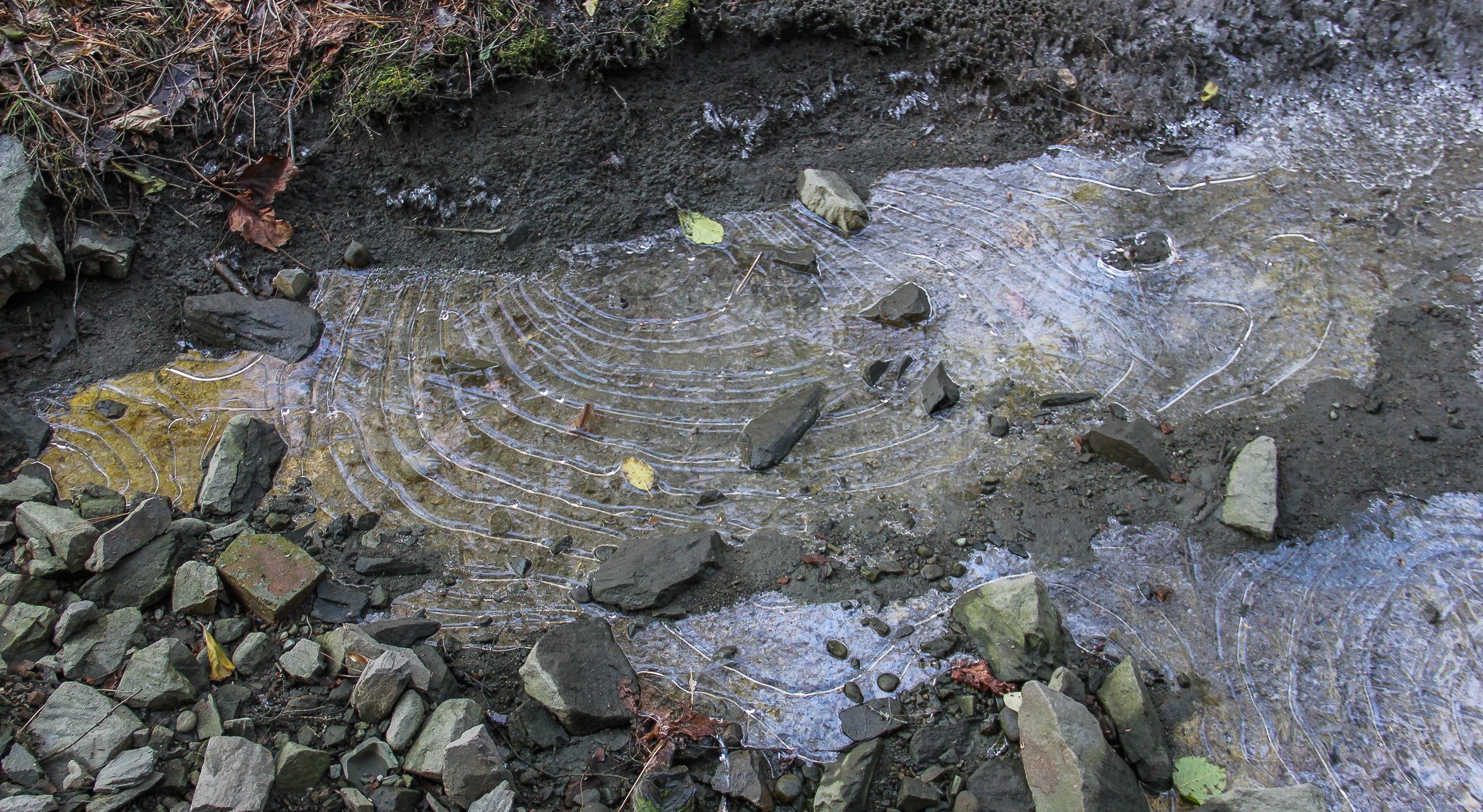
Puddle among Rocks: This ice sheet was suspended among rocks and anchored along some edges to ground. There is a line of apparent circular fractures shown in detail elsewhere here. Sheet about 2m long.

Rectangular Puddle: This puddle, about two meters wide, had to have been anchored along the edge, and to the visible few rocks including the one in the middle (see detail elsewhere here). The white color was caused by either recrystallization or microcracking.

Thin ice puddle showing healed fracture contours. The next image shows the growth of hoar under the prominent contours.
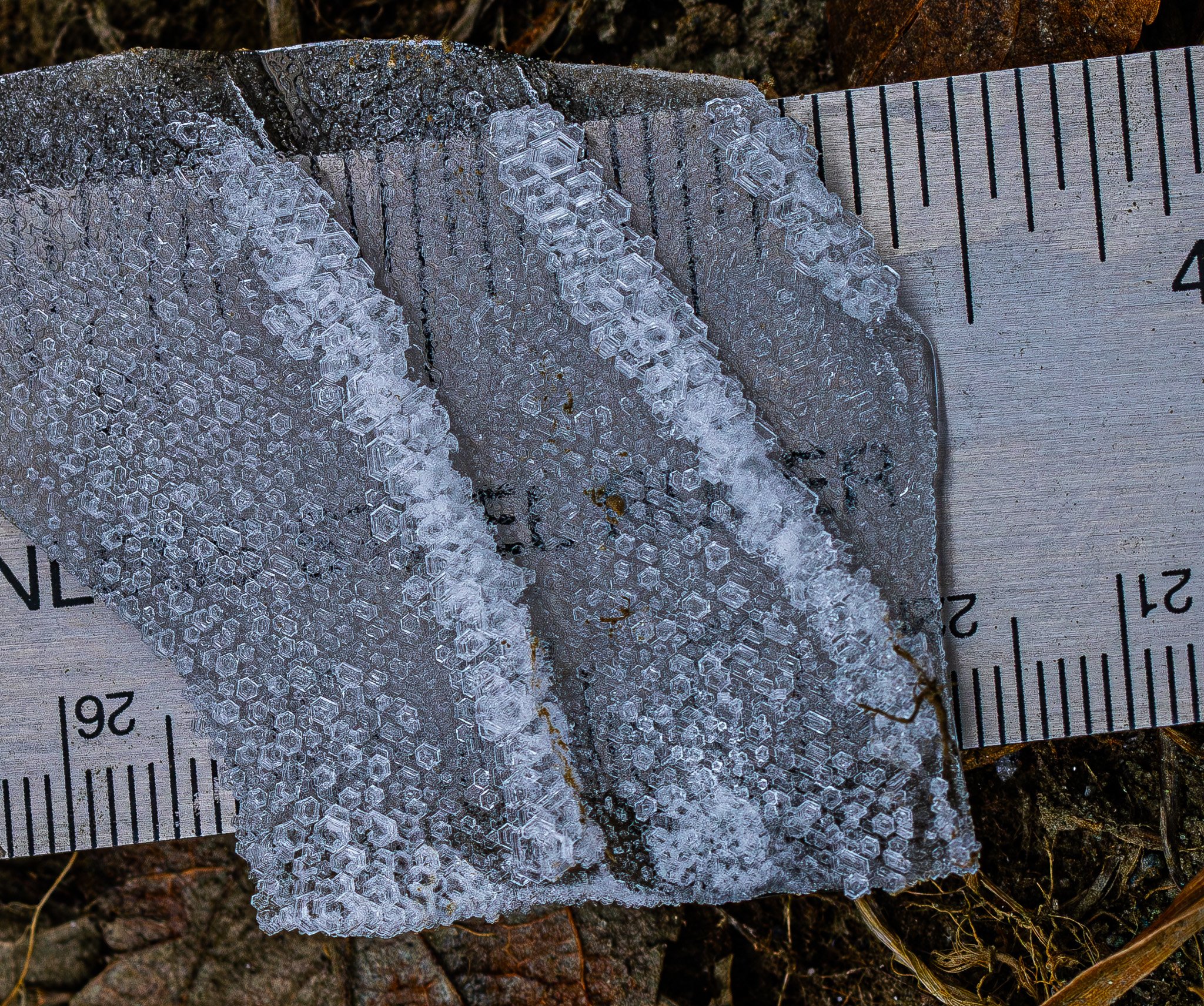
The underside of a puddle showing the accumulation of tiny hoar crystals, especially heaped under the fracture contours. Hoar grows from vapor, showing that water beneath the puddle was receding, while evaporating to the colder ice skim above.
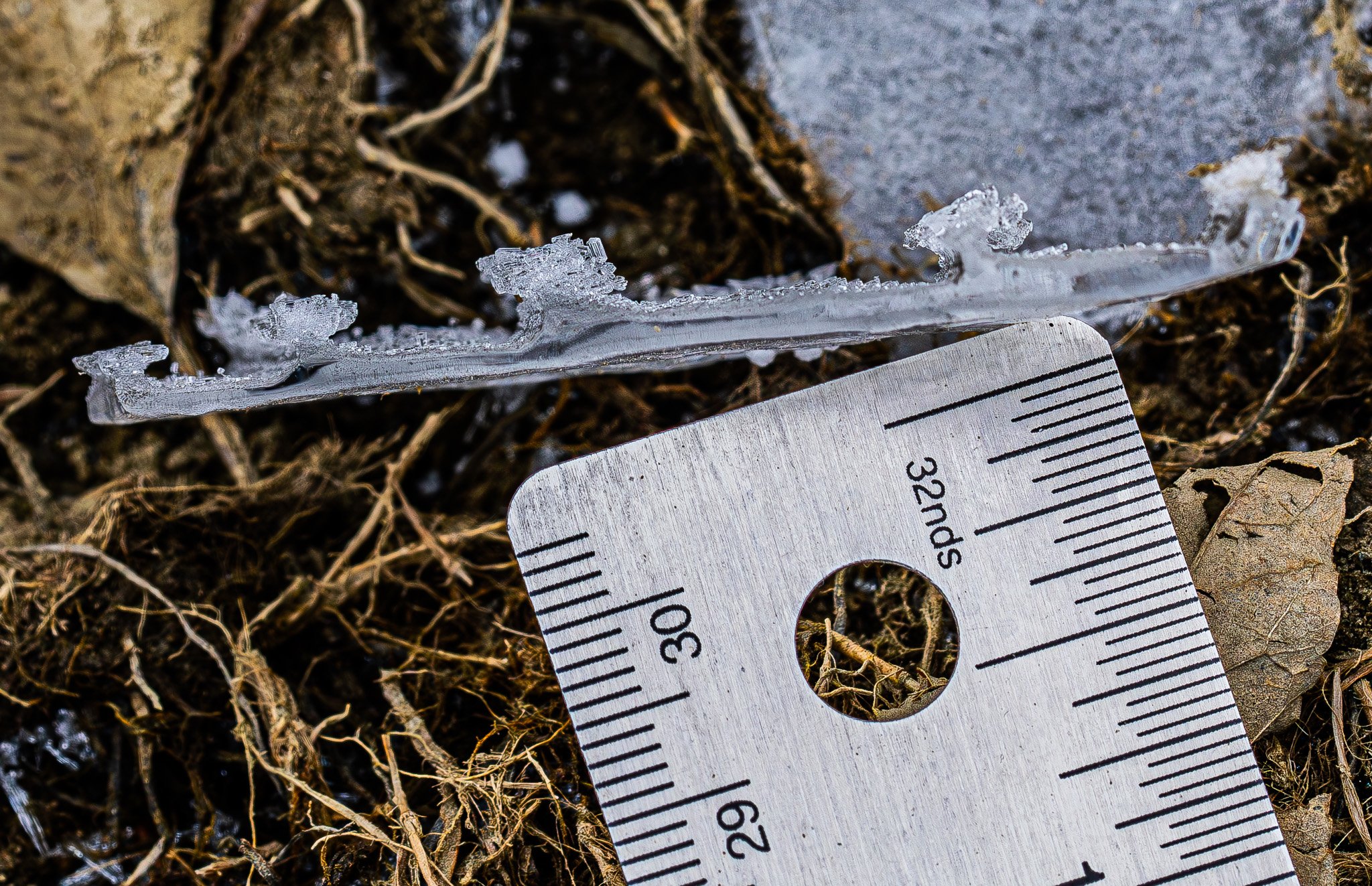
Edge view of hoar growth beneath a puddle-ice skim. Millimeter scale is on left side of ruler.