Ruts
Like ponds and lakes, the ice seeds that begin ice growth over ruts are mostly twigs or leaves the penetrate the water surface, but airborne bacteria, fungi or dust can also host ice seeds that fall to the water and start ice growth.

Rut Ice A: A completely ice cover that grew from the water it covered and included blades and dendrites. During cold snaps the ice contracted, causing stress fractures contoured by (primary) grounding line fractures. Additionally, as the water below evaporated to the ice above, the sheet began to sag of its own weight, causing stress fractures. Between these contours are dozens of faint concentric contours which may be stress-induced slip patterns or additional sag contours. The imaged area was about 70 cm.

Rut Ice B: A completely covered rut that grew from the water it covered and included blades and dendrites. During cold snaps the ice contracted, causing stress fractures contoured by (primary) grounding line fractures. Additionally, as the water below evaporated to the ice above, the sheet began to sag of its own weight, causing stress fractures. Between these contours are dozens of faint concentric contours which may be stress-induced slip patterns or additional sag contours. The imaged area was about 70 cm.
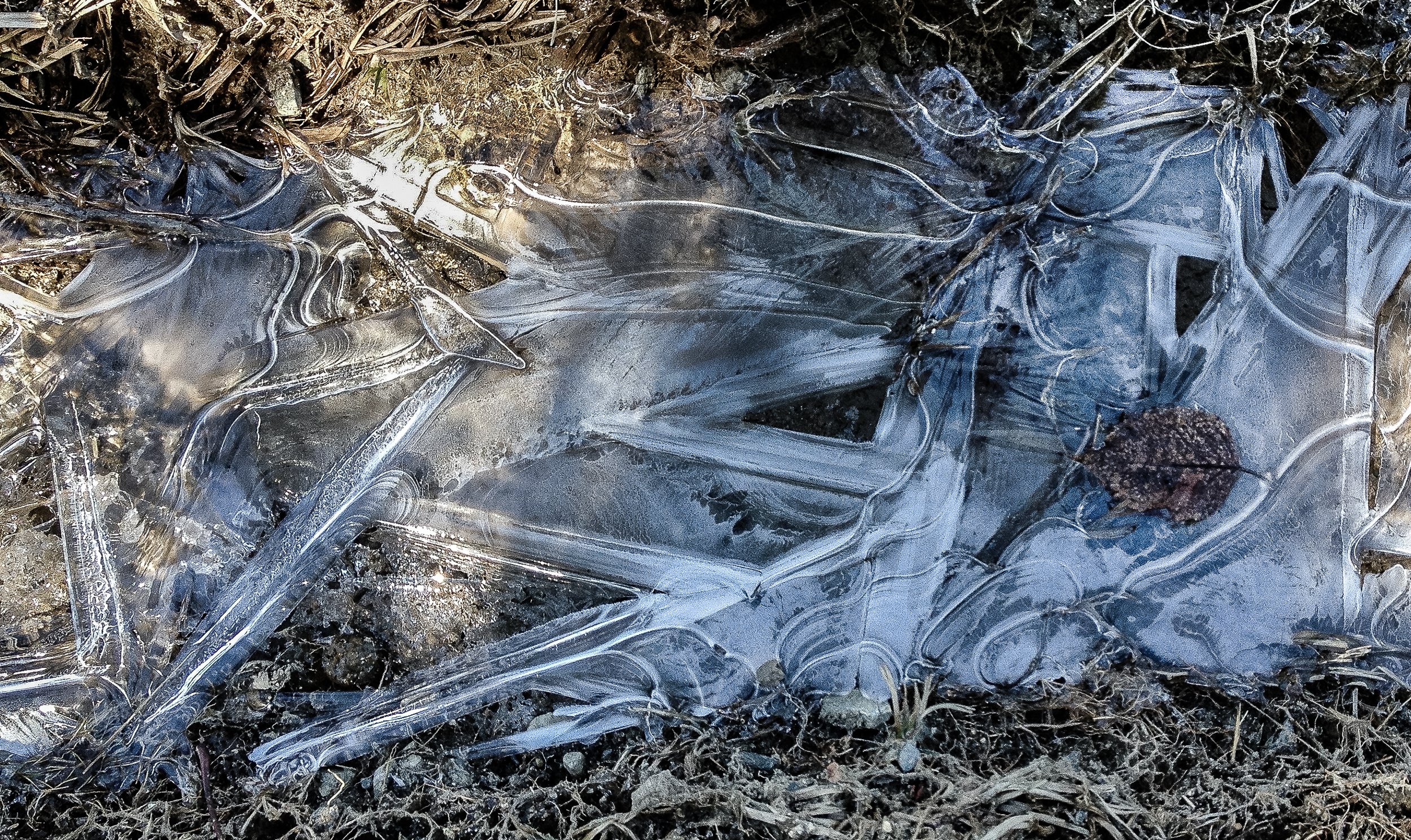
Ice blades and dendrites that collapsed into a rut once filled with water from which the ice grew. The imaged area was about 70 cm wide.

Rut Ice C: Sunlit Stress Fractures Within Thin Black Ice. Sublimation oon the fracture edges caused them to round and thus scatter sunlight. Note the transparent blades on the right side. This image got second place in a local photography exhibit.